
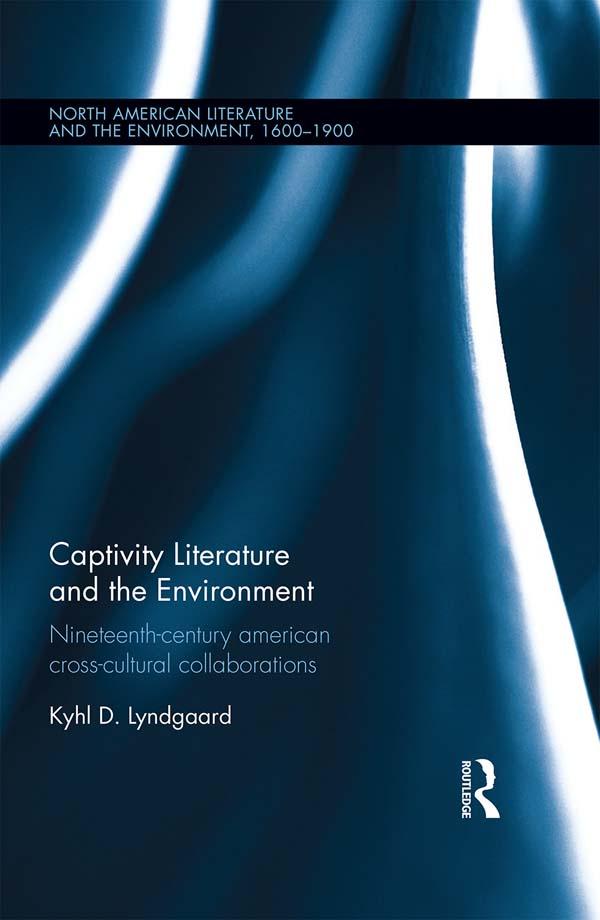
In his study of captivity narratives, Kyhl Lyndgaard argues that these accounts have influenced land-use policy and environmental attitudes at the same time that they reveal the complex relationship between ethnicity, landscape, and authorship. In connecting these themes, Lyndgaard offers readers an alternative environmental literature, one that is dependent on an understanding of nature as home rather than as a place of temporary retreat. He examines three captivity narratives written in the 1820s and 1830s - A Narrative of the Life of Mrs. Mary Jemison, The Captivity and Adventures of John Tanner, and Life of Black Hawk -all of which engage with the Jacksonian policy of Indian removal and resist tropes of the so-called Vanishing Indian. As Lyndgaard shows, the authors and the editors with whom they collaborated often saw their stories as a plea for environmental and social justice. At the same time, audiences have embraced them for their vision of a more inclusive and less exploitative American society than was proffered by the rhetoric of Manifest Destiny. Their legacy is that while environmental and social justice has been slow in fulfilment, their continued popularity testifies to the fact that the struggle for justice has never been ceded.
Seiten: 170
Kategorie: Kultur-, Genus- & Postkoloniala studier
e-ISBN: 9781317087397
Versandgewicht: 1.2 kg
Versand in: 1-2 Tage
Zahle einfach mit Karte, Klarna, Apple Pay oder Google Pay. Nicht zufrieden? Du hast immer ein 14-tägiges Widerrufsrecht. Lies mehr in unseren AGB. Hast du Fragen, schreib uns eine E-Mail an hello@memmo.org.
Memmo macht das Lernen einfacher – wo auch immer du bist. Bei uns findest du deine Kursbücher und smarte Lerntools an einem Ort: Zusammenfassungen, Quizzes, Podcasts und Lernkarten. Und Ted, dein Lernbuddy, beantwortet alles, was du wissen möchtest. Über 50.000 Studierende lernen bereits hier – gemacht, damit du schneller lernst und weniger Stress hast.
Das könnte dir auch gefallen
Buch kaufen0