
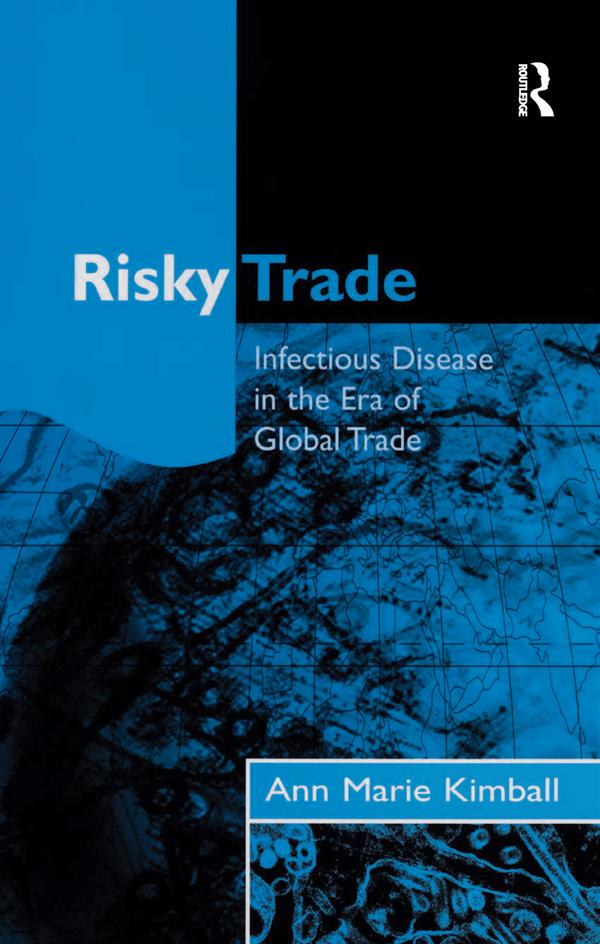
The current value of global trade has reached a staggering annual figure of $6 trillion in merchandise crossing borders. Such prolific global trading has, at the same time, begun to raise fears of pandemics and concerns for global health. Yet, investment in public health infrastructure and disease control was never designed to cope with international trade of this volume and diversity. Indeed, most health systems lag far behind, especially in poor countries. This has created new vulnerabilities for global populations to the introduction and amplification of infection through trade. Public fears have been further heightened by frightening news reports of deadly diseases such as Mad Cow disease and E. Coli. Risky Trade: Infectious Disease in the Era of Global Trade provides a thorough examination of the actual risks posed by disease in the age of globalization. Drawing on the economics of international trade and epidemiology, the author explores the critical health issues arising from the enormous increase in global trade and travel. Issues covered include: ¢ The scale of the problem with particular reference to the Sakai outbreak of E. Coli; ¢ Risks from particular microbes - Enteric and viral infections; Highly infectious agents; Antimicrobial resistance; and, Stealth agents; ¢ Global outbreaks as a result of human travel and trade; ¢ Prevention, surveillance and control; ¢ The future health of global trading. In addition to highlighting the problems, the book also addresses some of the potential benefits the same globalization can bring to epidemic control through surveillance, diagnostics, treatment and investigation. The empirical approach ties together existing descriptions and case studies of epidemics building a comprehensive framework for examining new events and considering historical experience with infectious outbreaks. The volume will be a valuable guide to students, academics, practitioners, and policy makers in the areas of international trade, health economics, epidemiology, international/public health and disease control.
Zahle einfach mit Karte, Klarna, Apple Pay oder Google Pay. Nicht zufrieden? Du hast immer ein 14-tägiges Widerrufsrecht. Lies mehr in unseren AGB. Hast du Fragen, schreib uns eine E-Mail an hello@memmo.org.
Memmo macht das Lernen einfacher – wo auch immer du bist. Bei uns findest du deine Kursbücher und smarte Lerntools an einem Ort: Zusammenfassungen, Quizzes, Podcasts und Lernkarten. Und Ted, dein Lernbuddy, beantwortet alles, was du wissen möchtest. Über 50.000 Studierende lernen bereits hier – gemacht, damit du schneller lernst und weniger Stress hast.
Das könnte dir auch gefallen
Buch kaufen0