
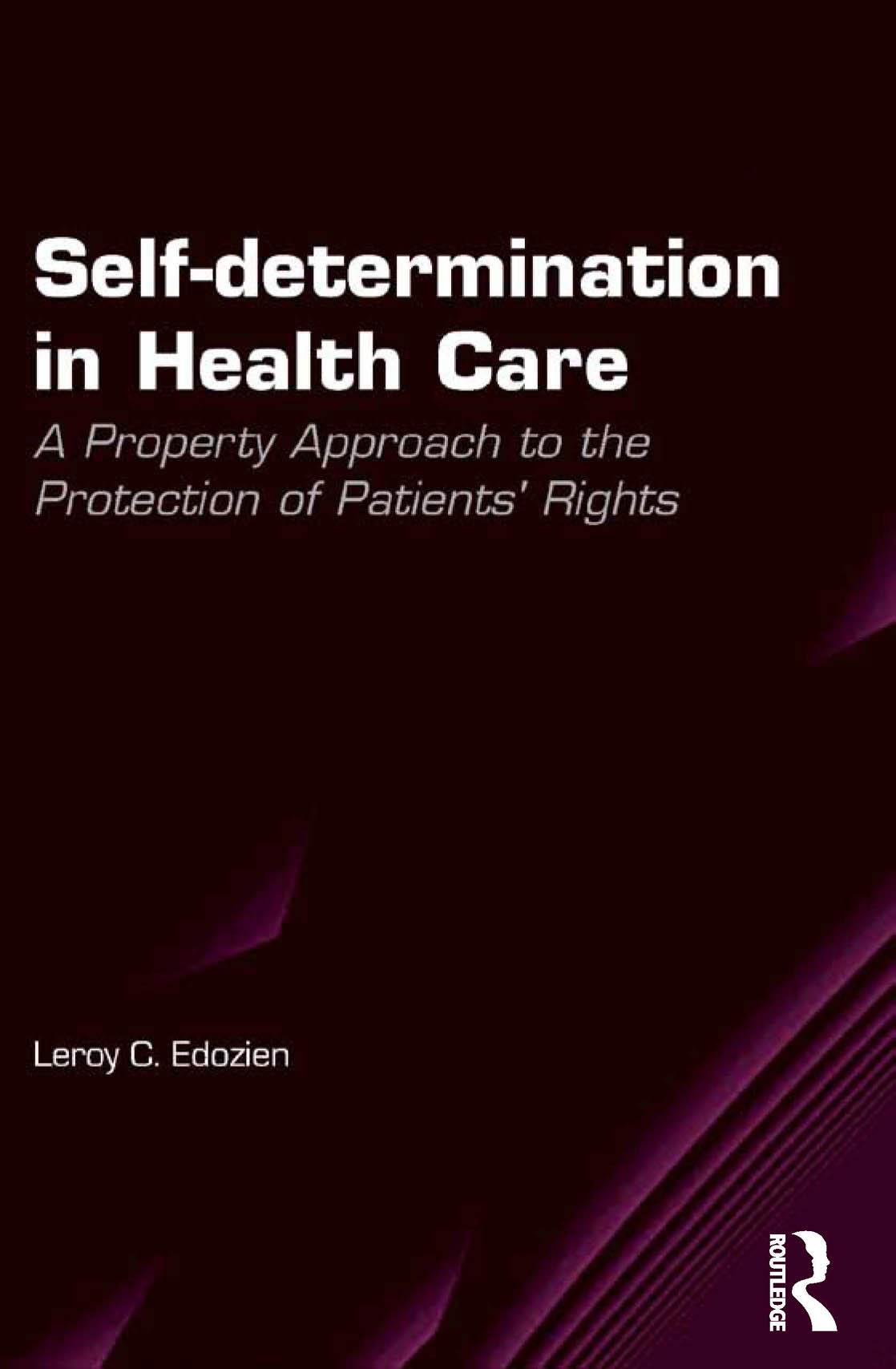
It is generally accepted in legal and bioethical discourse that the patient has a right to self-determination. In practice though, this is often not the case. Paternalism is waning and it is increasingly recognised that there are values other than medical factors which determine the choices that patients make. Unfortunately, these developments have not resulted in huge advances for patient self-determination, which is largely because the consent model has fundamental flaws that constrain its effectiveness. This book sets out to offer an alternative model to consent. In the property model proposed here, the patient’s bodily integrity is protected from unauthorised invasion, and their legitimate expectation to be provided with the relevant information to make an informed decision is taken to be a proprietary right. It is argued that the property model potentially overcomes the limitations of the consent model, including the obstacle caused by the requirement to prove causation in consent cases. The author proposes that this model could in the future provide an alternative or complementary approach for the courts to consider when dealing with cases relating to self-determination in health care.
Zahle einfach mit Karte, Klarna, Apple Pay oder Google Pay. Nicht zufrieden? Du hast immer ein 14-tägiges Widerrufsrecht. Lies mehr in unseren AGB. Hast du Fragen, schreib uns eine E-Mail an hello@memmo.org.
Memmo macht das Lernen einfacher – wo auch immer du bist. Bei uns findest du deine Kursbücher und smarte Lerntools an einem Ort: Zusammenfassungen, Quizzes, Podcasts und Lernkarten. Und Ted, dein Lernbuddy, beantwortet alles, was du wissen möchtest. Über 50.000 Studierende lernen bereits hier – gemacht, damit du schneller lernst und weniger Stress hast.
Das könnte dir auch gefallen
Buch kaufen0