
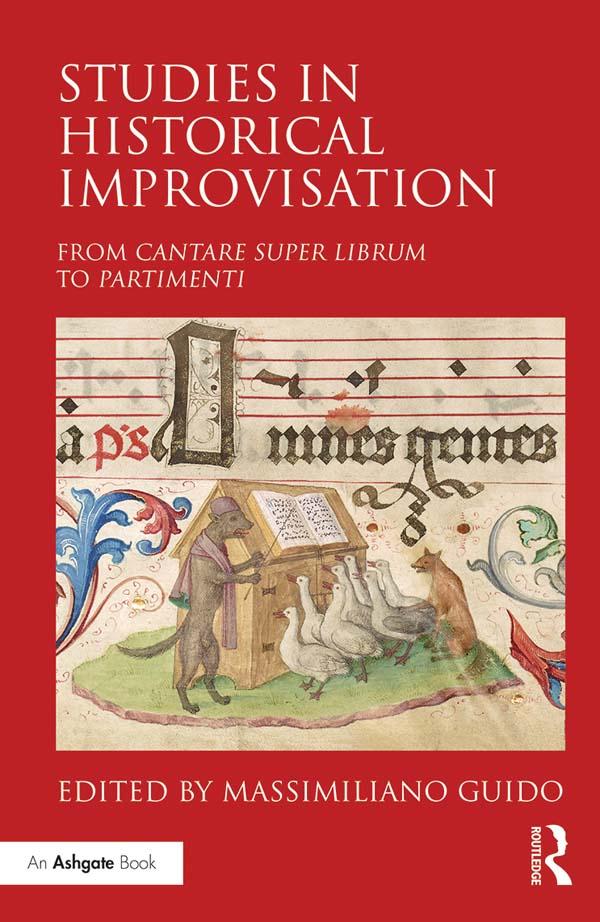
In recent years, scholars and musicians have become increasingly interested in the revival of musical improvisation as it was known in the Renaissance and Baroque periods. This historically informed practice is now supplanting the late Romantic view of improvised music as a rhapsodic endeavour—a musical blossoming out of the capricious genius of the player—that dominated throughout the twentieth century. In the Renaissance and Baroque eras, composing in the mind (alla mente) had an important didactic function. For several categories of musicians, the teaching of counterpoint happened almost entirely through practice on their own instruments. This volume offers the first systematic exploration of the close relationship among improvisation, music theory, and practical musicianship from late Renaissance into the Baroque era. It is not a historical survey per se, but rather aims to re-establish the importance of such a combination as a pedagogical tool for a better understanding of the musical idioms of these periods. The authors are concerned with the transferral of historical practices to the modern classroom, discussing new ways of revitalising the study and appreciation of early music. The relevance and utility of such an improvisation-based approach also changes our understanding of the balance between theoretical and practical sources in the primary literature, as well as the concept of music theory itself. Alongside a word-centred theoretical tradition, in which rules are described in verbiage and enriched by musical examples, we are rediscovering the importance of a music-centred tradition, especially in Spain and Italy, where the music stands alone and the learner must distil the rules by learning and playing the music. Throughout its various sections, the volume explores the path of improvisation from theory to practice and back again.
Zahle einfach mit Karte, Klarna, Apple Pay oder Google Pay. Nicht zufrieden? Du hast immer ein 14-tägiges Widerrufsrecht. Lies mehr in unseren AGB. Hast du Fragen, schreib uns eine E-Mail an hello@memmo.org.
Memmo macht das Lernen einfacher – wo auch immer du bist. Bei uns findest du deine Kursbücher und smarte Lerntools an einem Ort: Zusammenfassungen, Quizzes, Podcasts und Lernkarten. Und Ted, dein Lernbuddy, beantwortet alles, was du wissen möchtest. Über 50.000 Studierende lernen bereits hier – gemacht, damit du schneller lernst und weniger Stress hast.