
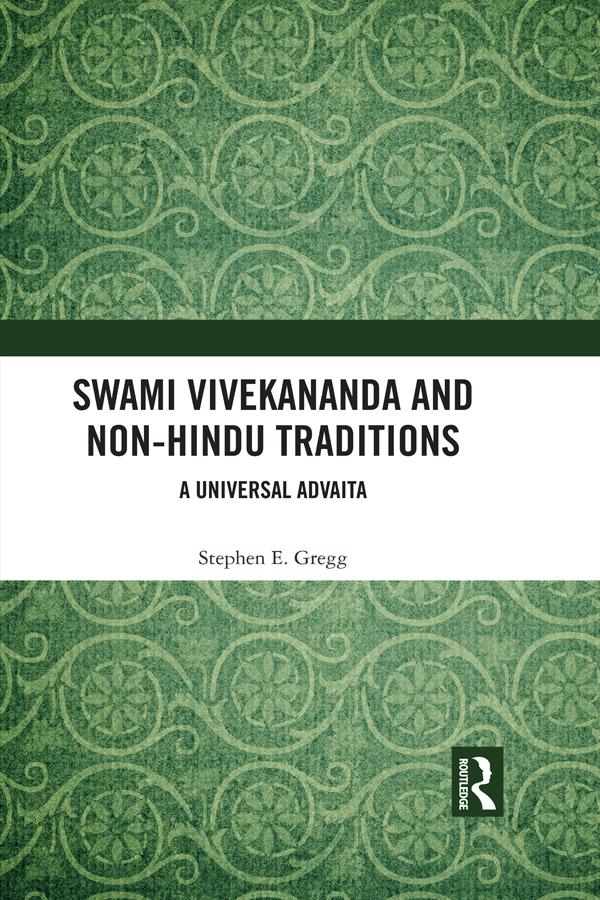
The Hindu thinker Swami Vivekananda (1863-1902) was and remains an important figure both within India, and in the West, where he was notable for preaching Vedanta. Scholarship surrounding Vivekananda is dominated by hagiography and his (mis)appropriation by the political Hindu Right. This work demonstrates that Vivekananda was no simplistic pluralist, as portrayed in hagiographical texts, nor narrow exclusivist, as portrayed by some modern Hindu nationalists, but a thoughtful, complex inclusivist.
The book shows that Vivekananda formulated a hierarchical and inclusivistic framework of Hinduism, based upon his interpretations of a four-fold system of Yoga. It goes on to argue that Vivekananda understood his formulation of Vedanta to be universal, and applied it freely to non-Hindu traditions, and in so doing, demonstrates that Vivekananda was consistently critical of ‘low level’ spirituality, not only in non-Hindu traditions, but also within Hinduism.
Demonstrating that Vivekananda is best understood within the context of ‘Advaitic primacy’, rather than ‘Hindu chauvinism’, this book will be of interest to scholars of Hinduism and South Asian religion and of South Asian diaspora communities and religious studies more generally.
Zahle einfach mit Karte, Klarna, Apple Pay oder Google Pay. Nicht zufrieden? Du hast immer ein 14-tägiges Widerrufsrecht. Lies mehr in unseren AGB. Hast du Fragen, schreib uns eine E-Mail an hello@memmo.org.
Memmo macht das Lernen einfacher – wo auch immer du bist. Bei uns findest du deine Kursbücher und smarte Lerntools an einem Ort: Zusammenfassungen, Quizzes, Podcasts und Lernkarten. Und Ted, dein Lernbuddy, beantwortet alles, was du wissen möchtest. Über 50.000 Studierende lernen bereits hier – gemacht, damit du schneller lernst und weniger Stress hast.