
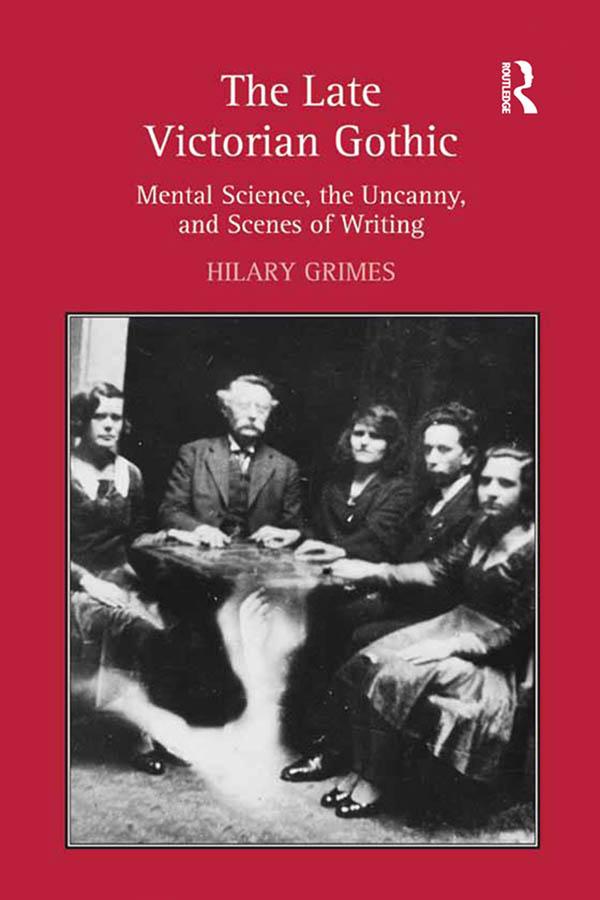
Examining the automatic writing of the spiritualist séances, discursive technologies like the telegraph and the photograph, various genres and late nineteenth-century mental science, this book shows the failure of writers' attempts to use technology as a way of translating the supernatural at the fin de siècle. Hilary Grimes shows that both new technology and explorations into the ghostly aspects of the mind made agency problematic. When notions of agency are suspended, Grimes argues, authorship itself becomes uncanny. Grimes's study is distinct in both recognizing and crossing strict boundaries to suggest that Gothic literature itself resists categorization, not only between literary periods, but also between genres. Treating a wide range of authors - Henry James, Rudyard Kipling, Arthur Conan Doyle, George Du Maurier, Vernon Lee, Mary Louisa Molesworth, Sarah Grand, and George Paston - Grimes shows how fin-de-siècle works negotiate themes associated with the Victorian and Modernist periods such as psychical research, mass marketing, and new technologies. With particular attention to texts that are not placed within the Gothic genre, but which nevertheless conceal Gothic themes, The Late Victorian Gothic demonstrates that the end of the nineteenth century produced a Gothicism specific to the period.
Zahle einfach mit Karte, Klarna, Apple Pay oder Google Pay. Nicht zufrieden? Du hast immer ein 14-tägiges Widerrufsrecht. Lies mehr in unseren AGB. Hast du Fragen, schreib uns eine E-Mail an hello@memmo.org.
Memmo macht das Lernen einfacher – wo auch immer du bist. Bei uns findest du deine Kursbücher und smarte Lerntools an einem Ort: Zusammenfassungen, Quizzes, Podcasts und Lernkarten. Und Ted, dein Lernbuddy, beantwortet alles, was du wissen möchtest. Über 50.000 Studierende lernen bereits hier – gemacht, damit du schneller lernst und weniger Stress hast.
Das könnte dir auch gefallen
Buch kaufen0