
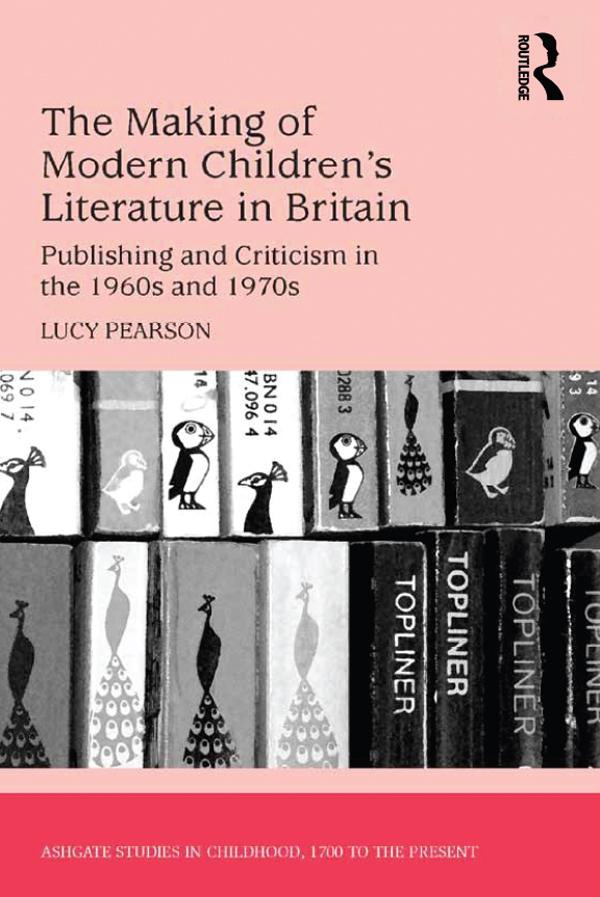
Lucy Pearson’s lively and engaging book examines British children’s literature during the period widely regarded as a ’second golden age’. Drawing extensively on archival material, Pearson investigates the practical and ideological factors that shaped ideas of ’good’ children’s literature in Britain, with particular attention to children’s book publishing. Pearson begins with a critical overview of the discourse surrounding children’s literature during the 1960s and 1970s, summarizing the main critical debates in the context of the broader social conversation that took place around children and childhood. The contributions of publishing houses, large and small, to changing ideas about children’s literature become apparent as Pearson explores the careers of two enormously influential children’s editors: Kaye Webb of Puffin Books and Aidan Chambers of Topliner Macmillan. Brilliant as an innovator of highly successful marketing strategies, Webb played a key role in defining what were, in her words, ’the best in children’s books’, while Chambers’ work as an editor and critic illustrates the pioneering nature of children's publishing during this period. Pearson shows that social investment was a central factor in the formation of this golden age, and identifies its legacies in the modern publishing industry, both positive and negative.
Zahle einfach mit Karte, Klarna, Apple Pay oder Google Pay. Nicht zufrieden? Du hast immer ein 14-tägiges Widerrufsrecht. Lies mehr in unseren AGB. Hast du Fragen, schreib uns eine E-Mail an hello@memmo.org.
Memmo macht das Lernen einfacher – wo auch immer du bist. Bei uns findest du deine Kursbücher und smarte Lerntools an einem Ort: Zusammenfassungen, Quizzes, Podcasts und Lernkarten. Und Ted, dein Lernbuddy, beantwortet alles, was du wissen möchtest. Über 50.000 Studierende lernen bereits hier – gemacht, damit du schneller lernst und weniger Stress hast.
Das könnte dir auch gefallen
Buch kaufen0