
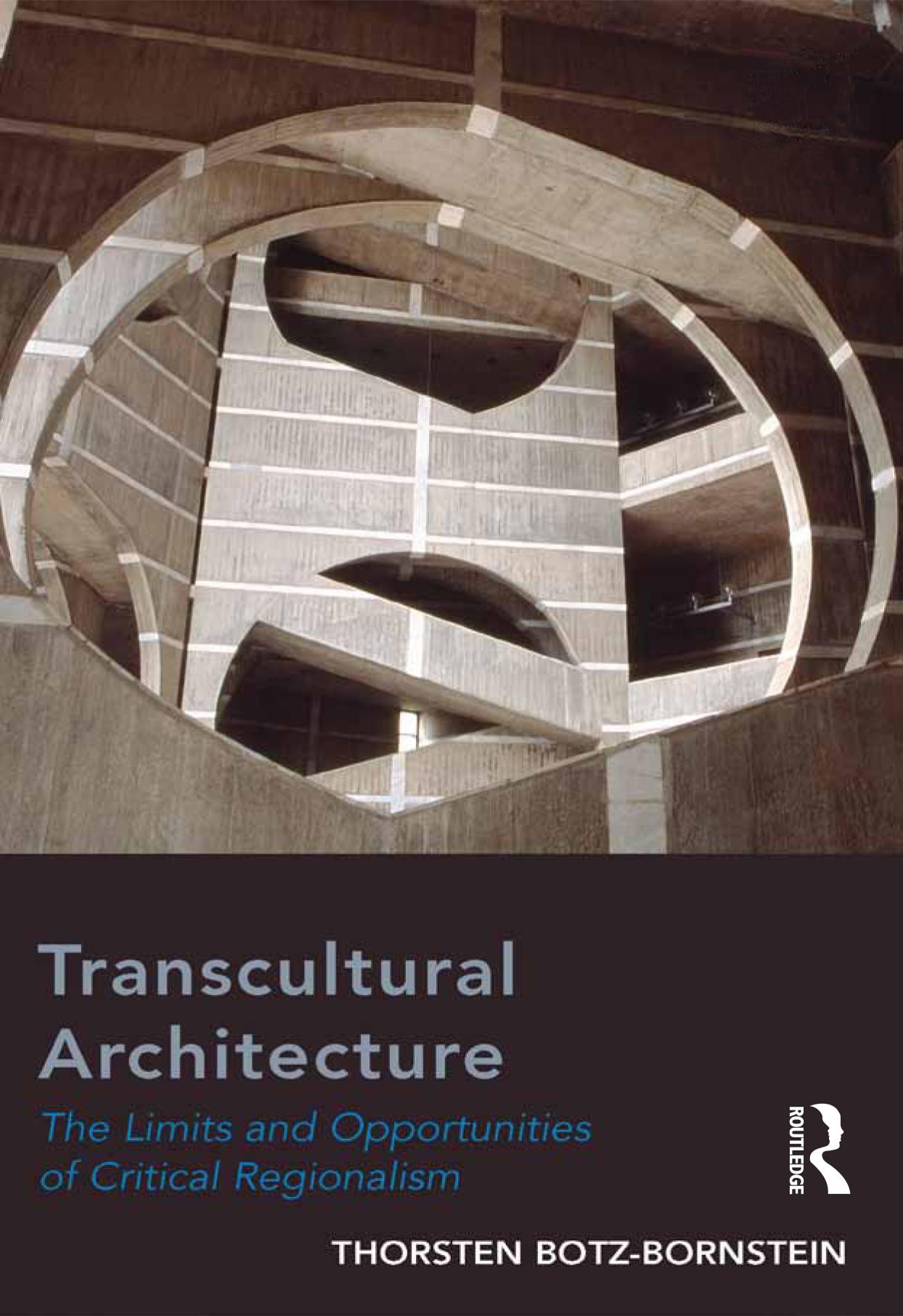
Critical Regionalism is a notion which gained popularity in architectural debate as a synthesis of universal, 'modern' elements and individualistic elements derived from local cultures. This book shifts the focus from Critical Regionalism towards a broader concept of 'Transcultural Architecture' and defines Critical Regionalism as a subgroup of the latter. One of the benefits that this change of perspective brings about is that a large part of the political agenda of Critical Regionalism, which consists of resisting attitudes forged by typically Western experiences, is 'softened' and negotiated according to premises provided by local circumstances. A further benefit is that several responses dependent on factors that initial definitions of Critical Regionalism never took into account can now be considered. At the book’s centre is an analysis of Reima and Raili Pietilä’s Sief Palace Area project in Kuwait. Further cases of modern architecture in China, Korea, and Saudi Arabia show that the critique, which holds that Critical Regionalism is a typical 'western' exercise, is not sound in all circumstances. The book argues that there are different Critical Regionalisms and not all of them impose Western paradigms on non-Western cultures. Non-Western regionalists can also successfully participate in the Western enlightened discourse, even when they do not directly and consciously act against Western models. Furthermore, the book proposes that a certain 'architectural rationality' can be contained in architecture itself - not imposed by outside parameters like aesthetics, comfort, or even tradition, but flowing out of a social game of which architecture is a part. The key concept is that of the 'form of life', as developed by Ludwig Wittgenstein, whose thoughts are here linked to Critical Regionalism. Kenneth Frampton argues that Critical Regionalism offers something well beyond comfort and accommodation. What he has in mind are ethical prescripts closely linked to a
Zahle einfach mit Karte, Klarna, Apple Pay oder Google Pay. Nicht zufrieden? Du hast immer ein 14-tägiges Widerrufsrecht. Lies mehr in unseren AGB. Hast du Fragen, schreib uns eine E-Mail an hello@memmo.org.
Memmo macht das Lernen einfacher – wo auch immer du bist. Bei uns findest du deine Kursbücher und smarte Lerntools an einem Ort: Zusammenfassungen, Quizzes, Podcasts und Lernkarten. Und Ted, dein Lernbuddy, beantwortet alles, was du wissen möchtest. Über 50.000 Studierende lernen bereits hier – gemacht, damit du schneller lernst und weniger Stress hast.
Das könnte dir auch gefallen
Buch kaufen0