
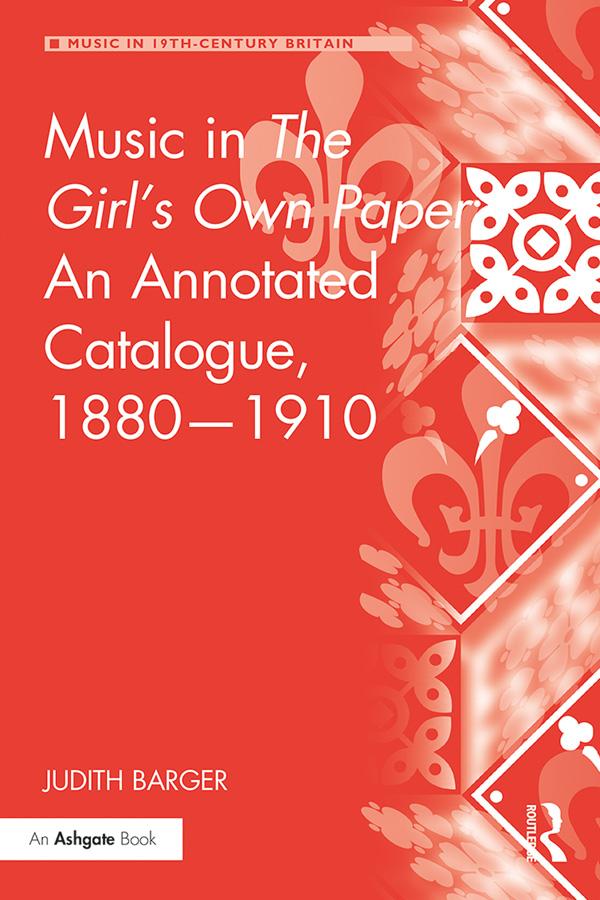
Nineteenth-century British periodicals for girls and women offer a wealth of material to understand how girls and women fit into their social and cultural worlds, of which music making was an important part. The Girl's Own Paper, first published in 1880, stands out because of its rich musical content. Keeping practical usefulness as a research tool and as a guide to further reading in mind, Judith Barger has catalogued the musical content found in the weekly and later monthly issues during the magazine's first thirty years, in music scores, instalments of serialized fiction about musicians, music-related nonfiction, poetry with a musical title or theme, illustrations depicting music making and replies to musical correspondents. The book's introductory chapter reveals how content in The Girl's Own Paper changed over time to reflect a shift in women's music making from a female accomplishment to an increasingly professional role within the discipline, using 'the piano girl' as a case study. A comparison with musical content found in The Boy's Own Paper over the same time span offers additional insight into musical content chosen for the girls' magazine. A user's guide precedes the chronological annotated catalogue; the indexes that follow reveal the magazine's diversity of approach to the subject of music.
Zahle einfach mit Karte, Klarna, Apple Pay oder Google Pay. Nicht zufrieden? Du hast immer ein 14-tägiges Widerrufsrecht. Lies mehr in unseren AGB. Hast du Fragen, schreib uns eine E-Mail an hello@memmo.org.
Memmo macht das Lernen einfacher – wo auch immer du bist. Bei uns findest du deine Kursbücher und smarte Lerntools an einem Ort: Zusammenfassungen, Quizzes, Podcasts und Lernkarten. Und Ted, dein Lernbuddy, beantwortet alles, was du wissen möchtest. Über 50.000 Studierende lernen bereits hier – gemacht, damit du schneller lernst und weniger Stress hast.