
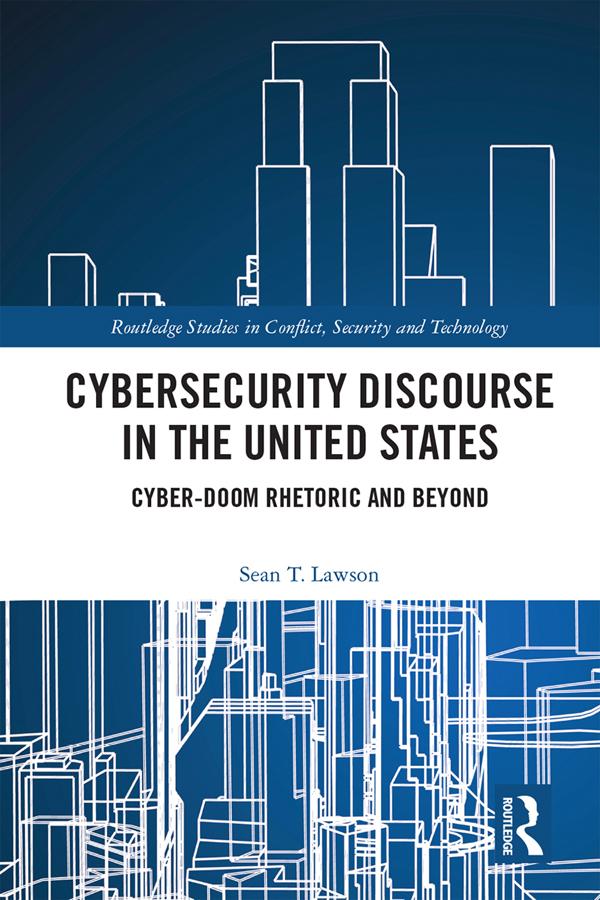
This book examines the role of cyber-doom rhetoric in the U.S. cybersecurity debate.
For more than two decades, fear of "cyber-doom" scenarios—i.e. cyberattacks against critical infrastructure resulting in catastrophic physical, social, and economic impacts—has been a persistent feature of the U.S. cybersecurity debate. This is despite the fact that no cyberattack has come close to realizing such impacts. This book argues that such scenarios are part of a broader rhetoric of cyber-doom within the U.S. cybersecurity debate, and takes a multidisciplinary approach that draws on research in history, sociology, communication, psychology, and political science. It identifies a number of variations of cyber-doom rhetoric, then places them into a larger historical context, assesses how realistic the fears expressed in such rhetoric are, and finally draws out the policy implications of relying on these fears to structure our response to cybersecurity challenges. The United States faces very real cybersecurity challenges that are, nonetheless, much less dramatic than what is implied in the rhetoric. This book argues that relying on cyber-doom rhetoric to frame our thinking about such threats is counterproductive, and encourages us to develop ways of thinking and speaking about cybersecurity beyond cyber-doom.
This book will be of much interest to students of cybersecurity, foreign policy, public administration, national security, and international relations in general.
Zahle einfach mit Karte, Klarna, Apple Pay oder Google Pay. Nicht zufrieden? Du hast immer ein 14-tägiges Widerrufsrecht. Lies mehr in unseren AGB. Hast du Fragen, schreib uns eine E-Mail an hello@memmo.org.
Memmo macht das Lernen einfacher – wo auch immer du bist. Bei uns findest du deine Kursbücher und smarte Lerntools an einem Ort: Zusammenfassungen, Quizzes, Podcasts und Lernkarten. Und Ted, dein Lernbuddy, beantwortet alles, was du wissen möchtest. Über 50.000 Studierende lernen bereits hier – gemacht, damit du schneller lernst und weniger Stress hast.