
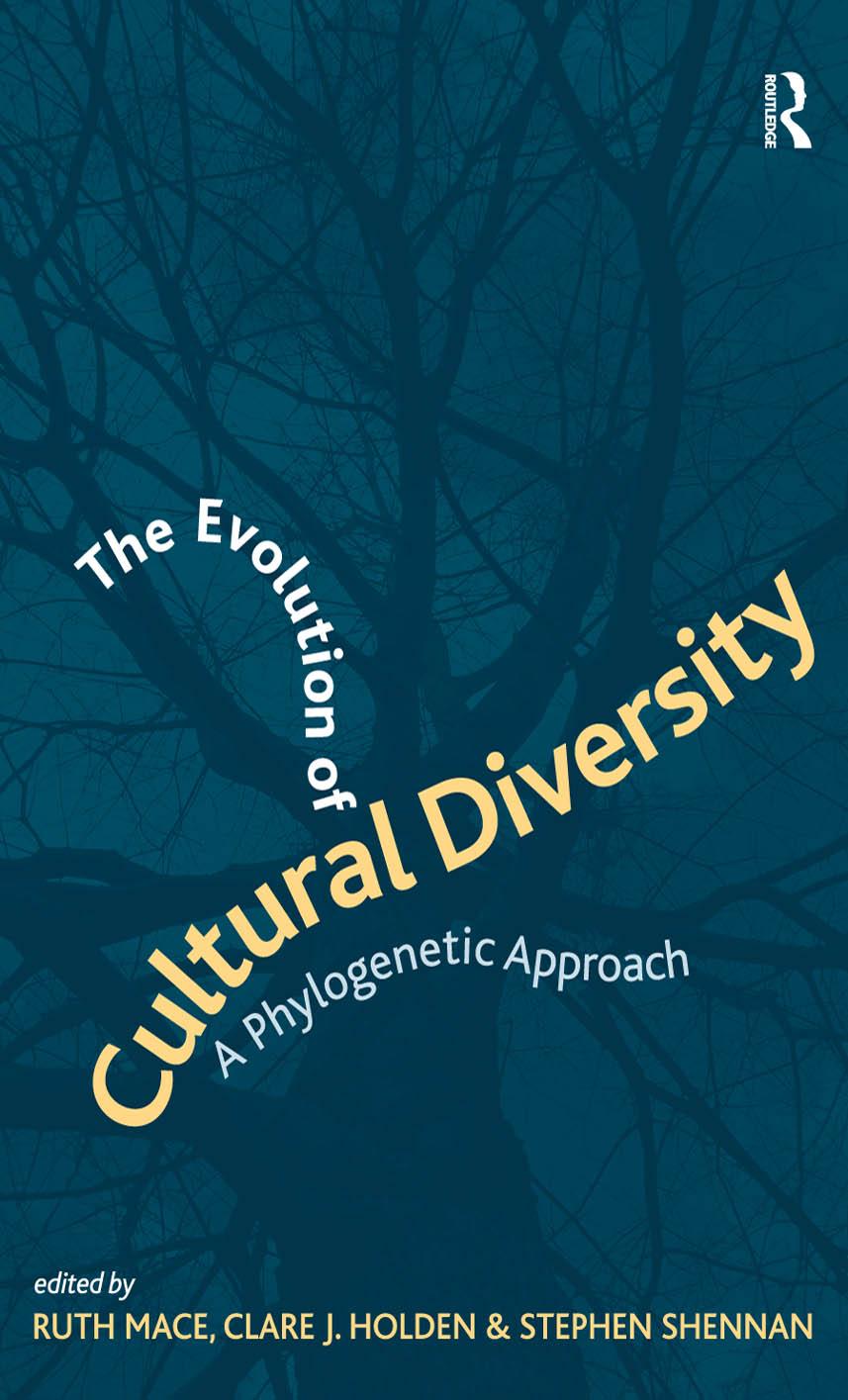
Virtually all aspects of human behavior show enormous variation both within and between cultural groups, including material culture, social organization and language. Thousands of distinct cultural groups exist: about 6,000 languages are spoken today, and it is thought that a far greater number of languages existed in the past but became extinct. Using a Darwinian approach, this book seeks to explain this rich cultural variation. There are a number of theoretical reasons to believe that cultural diversification might be tree-like, that is phylogenetic: material and non-material culture is clearly inherited by descendants, there is descent with modification, and languages appear to be hierarchically related. There are also a number of theoretical reasons to believe that cultural evolution is not tree-like: cultural inheritance is not Mendelian and can indeed be vertical, horizontal or oblique, evidence of borrowing abounds, cultures are not necessarily biological populations and can be transient and complex. Here, for the first time, this title tackles these questions of cultural evolution empirically and quantitatively, using a range of case studies from Africa, the Pacific, Europe, Asia and America. A range of powerful theoretical tools developed in evolutionary biology is used to test detailed hypotheses about historical patterns and adaptive functions in cultural evolution. Evidence is amassed from archaeological, linguist and cultural datasets, from both recent and historical or pre-historical time periods. A unifying theme is that the phylogenetic approach is a useful and powerful framework, both for describing the evolutionary history of these traits, and also for testing adaptive hypotheses about their evolution and co-evolution. Contributors include archaeologists, anthropologists, evolutionary biologists and linguists, and this book will be of great interest to all those involved in these areas.
Zahle einfach mit Karte, Klarna, Apple Pay oder Google Pay. Nicht zufrieden? Du hast immer ein 14-tägiges Widerrufsrecht. Lies mehr in unseren AGB. Hast du Fragen, schreib uns eine E-Mail an hello@memmo.org.
Memmo macht das Lernen einfacher – wo auch immer du bist. Bei uns findest du deine Kursbücher und smarte Lerntools an einem Ort: Zusammenfassungen, Quizzes, Podcasts und Lernkarten. Und Ted, dein Lernbuddy, beantwortet alles, was du wissen möchtest. Über 50.000 Studierende lernen bereits hier – gemacht, damit du schneller lernst und weniger Stress hast.
Das könnte dir auch gefallen
Buch kaufen0