
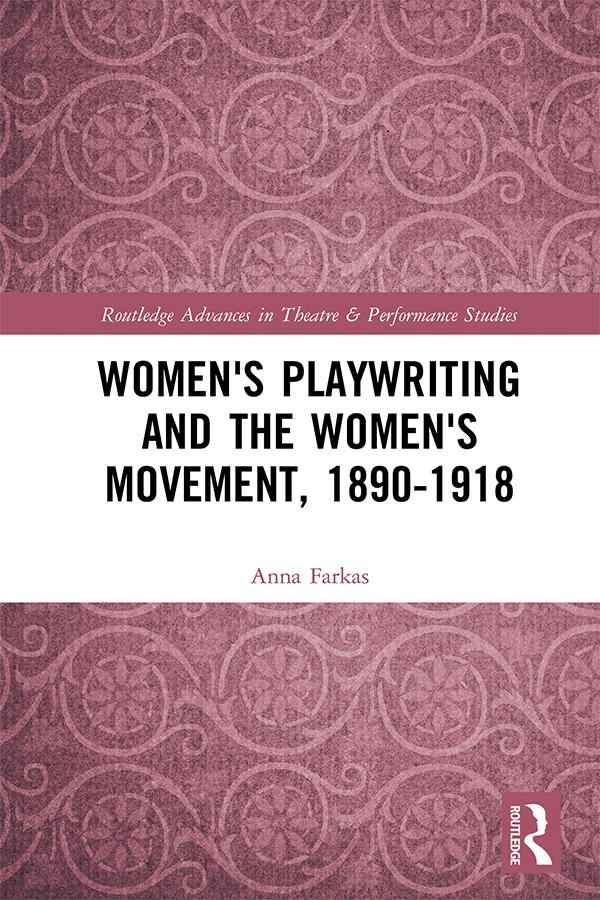
The influence of the women’s movement has long been a scholarly priority in the study of British women’s drama of the late nineteenth and early twentieth centuries, but previous scholarship has largely clustered around two events: the New Woman in the 1890s and the suffrage campaign in the years before the First World War. Women’s Playwriting and the Women’s Movement, 1890–1918 is the first designated study of British women’s drama from a period of exceptional productivity and innovation for female playwrights.
Both the British theatre and women’s position within British society underwent fundamental changes in this period, and this book shows how female dramatists carefully negotiated their position in the heated debates about women’s rights that occurred at this time, while staking out a place for themselves in an evolving theatrical landscape. Farkas also identifies the women’s movement as a key influence on the development of female-authored drama between 1890 and 1918, but argues that scholarly prioritizing of the "radicalism" of work associated with the New Woman and the suffrage campaign has had a distorting effect in the past.
Ideal for scholars of British and Victorian theatre, Women’s Playwriting and the Women’s Movement, 1890–1918 offers a new perspective which emphasizes the complexity of women playwrights’ engagement with first-wave feminism and links it to the diversification of the British theatre in this period.
Zahle einfach mit Karte, Klarna, Apple Pay oder Google Pay. Nicht zufrieden? Du hast immer ein 14-tägiges Widerrufsrecht. Lies mehr in unseren AGB. Hast du Fragen, schreib uns eine E-Mail an hello@memmo.org.
Memmo macht das Lernen einfacher – wo auch immer du bist. Bei uns findest du deine Kursbücher und smarte Lerntools an einem Ort: Zusammenfassungen, Quizzes, Podcasts und Lernkarten. Und Ted, dein Lernbuddy, beantwortet alles, was du wissen möchtest. Über 50.000 Studierende lernen bereits hier – gemacht, damit du schneller lernst und weniger Stress hast.