
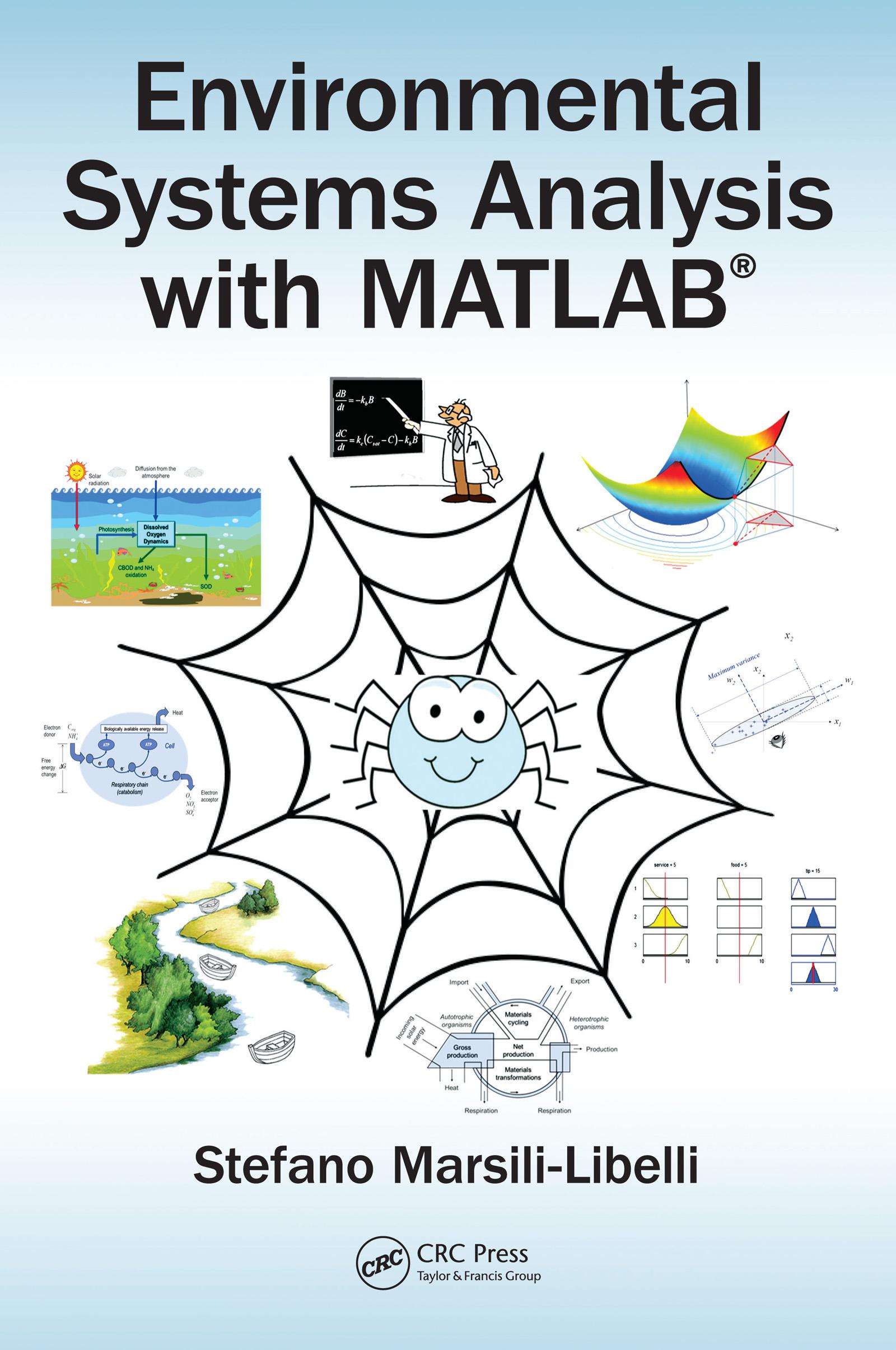
Explore the inner workings of environmental processes using a mathematical approach. Environmental Systems Analysis with MATLAB® combines environmental science concepts and system theory with numerical techniques to provide a better understanding of how our environment works. The book focuses on building mathematical models of environmental systems, and using these models to analyze their behaviors. Designed with the environmental professional in mind, it offers a practical introduction to developing the skills required for managing environmental modeling and data handling.
The book follows a logical sequence from the basic steps of model building and data analysis to implementing these concepts into working computer codes, and then on to assessing their results. It describes data processing (rarely considered in environmental analysis); outlines the tools needed to successfully analyze data and develop models, and moves on to real-world problems. The author illustrates in the first four chapters the methodological aspects of environmental systems analysis, and in subsequent chapters applies them to specific environmental concerns.
The accompanying software bundle is freely downloadable from the book web site. It follows the chapters sequence and provides a hands-on experience, allowing the reader to reproduce the figures in the text and experiment by varying the problem setting. A basic MATLAB literacy is required to get the most out of the software.
Ideal for coursework and self-study, this offering:
- Deals with the basic concepts of environmental modeling and identification, both from the mechanistic and the data-driven viewpoint
- Provides a unifying methodological approach to deal with specific aspects of environmental modeling: population dynamics, flow systems, and environmental microbiology
- Assesses the similarities and the differences of microbial processes in natural and man-made environments
- Analyzes several aquatic ecosystems’ case studies
- Presents an application of an extended Streeter & Phelps (S&P) model
- Describes an ecological method to estimate the bioavailable nutrients in natural waters
- Considers a lagoon ecosystem from several viewpoints, including modeling and management, and more
Zahle einfach mit Karte, Klarna, Apple Pay oder Google Pay. Nicht zufrieden? Du hast immer ein 14-tägiges Widerrufsrecht. Lies mehr in unseren AGB. Hast du Fragen, schreib uns eine E-Mail an hello@memmo.org.
Memmo macht das Lernen einfacher – wo auch immer du bist. Bei uns findest du deine Kursbücher und smarte Lerntools an einem Ort: Zusammenfassungen, Quizzes, Podcasts und Lernkarten. Und Ted, dein Lernbuddy, beantwortet alles, was du wissen möchtest. Über 50.000 Studierende lernen bereits hier – gemacht, damit du schneller lernst und weniger Stress hast.