
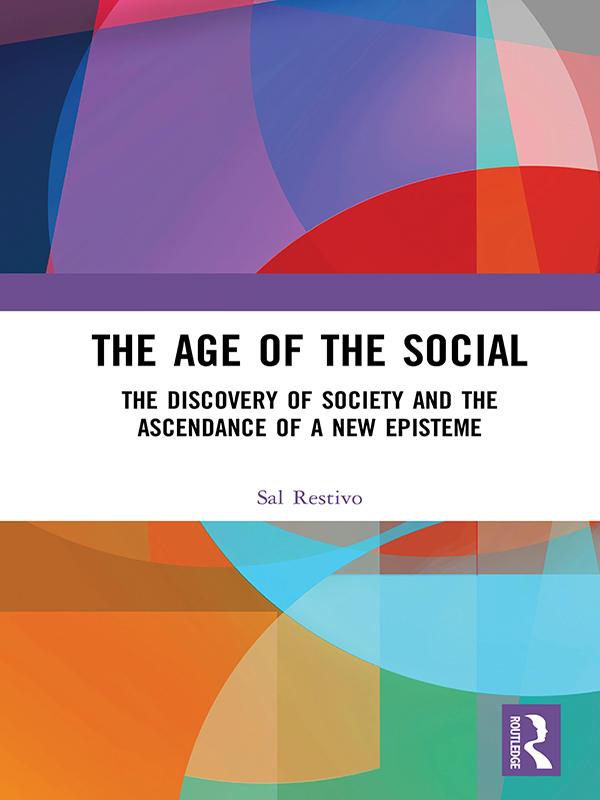
The concept of society sui generis – society as a level of reality which could be studied scientifically – crystallized in the middle of the nineteenth century in Europe, with the work of Durkheim, Marx and Weber and today, more than at any other period in history, the idea of the social has gained a foothold in philosophy, biology, and neuroscience. However, this idea has emerged into prominence not through the historical or contemporary efforts of sociologists, but mainly through the efforts of biologists and neuroscientists.
This book seeks to re-establish the credentials of sociology as the science of society. While acknowledging the amalgamation of traditional disciplines into interdisciplinary and multidisciplinary networks of research and theory, and championing interdisciplinarity in recognising the capacity of converging perspectives to yield more interesting general theories of social life, the author defends disciplinarity in maintaining sociology’s achievements as a discipline.
With chapters on the sociological world view, imagining society, the self, love, education, mathematics and religion, The Age of the Social re-states the importance of sociology as the source of robust ideas about the social in an age in which this notion has grown in importance. As such, it will appeal to scholars across the social sciences, with interests in method and philosophy in the social disciplines.
Zahle einfach mit Karte, Klarna, Apple Pay oder Google Pay. Nicht zufrieden? Du hast immer ein 14-tägiges Widerrufsrecht. Lies mehr in unseren AGB. Hast du Fragen, schreib uns eine E-Mail an hello@memmo.org.
Memmo macht das Lernen einfacher – wo auch immer du bist. Bei uns findest du deine Kursbücher und smarte Lerntools an einem Ort: Zusammenfassungen, Quizzes, Podcasts und Lernkarten. Und Ted, dein Lernbuddy, beantwortet alles, was du wissen möchtest. Über 50.000 Studierende lernen bereits hier – gemacht, damit du schneller lernst und weniger Stress hast.