
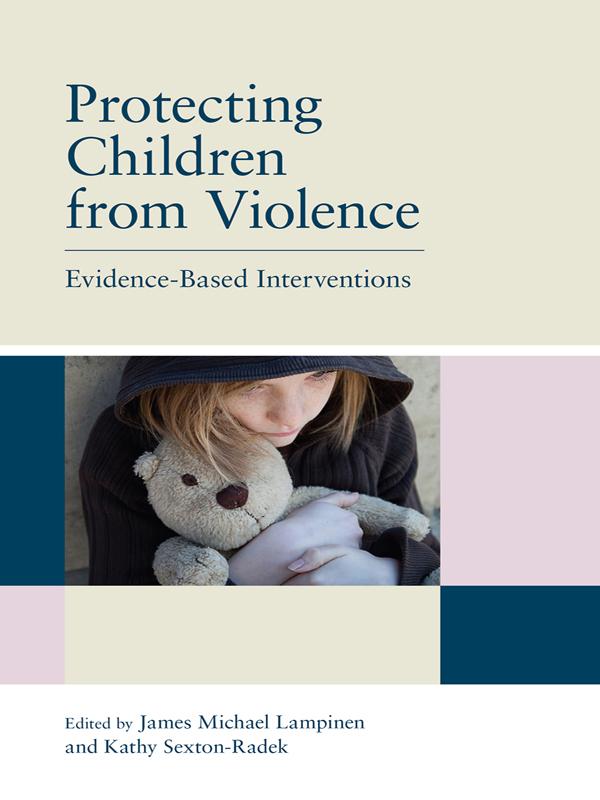
Providing an evidence-based understanding of the causes and consequences of violence against children, experts in the field examine the best practices used to help protect children from violence. Various types of violence are reviewed including physical and sexual abuse, (cyber-)bullying, human trafficking, online predators, abductions, and war. In addition, it reviews the various perpetrators of such violence including parents and relatives, strangers, other children, and societal institutions. The possible outcomes of such violence including physical injuries, death, depression, anxiety, post-traumatic stress disorders, and damage to the social fabric of the local community are also explored.
To enhance accessibility, each contributor addresses common themes:
- Opening case studies dramatically illustrate the human cost of abuse and neglect
- Empirically driven estimates of the scope of problem to better understand who is at risk and why
- Empirically driven testing of interventions to maximize effectiveness of programs
- How current research compares to public perception and the impact on public policy
- The worldwide problem of violence against children
- Evidence-based recommendations for reducing violence against children.
The book opens with a review of the history of the problem, the methodological approaches used to study it, and current "best practice" prevention strategies. The methods used to identify peer victims are then explored. Next child eyewitness memory is examined including the most effective techniques for maximizing the retrieval of information. This is followed by the research on missing and abducted children including the effectiveness of recovery programs such as supermarket campaigns and forensic age profiles. Next how the Internet is used in the victimization of children is explored including tips to help protect children online. Public attitudes toward sex offender registration laws are then reviewed followed by vulnerabilities that include genetic, neuropsychological, temperamental, cognitive, perceptual and social factors. International perspectives on protecting children from violence and global health inequities are then addressed. The book concludes with recommendations for future research.
Contributors are noted scholars from a broad range of disciplines. As such, the book appeals to researchers and advanced students in developmental, counseling, clinical, cognitive, evolutionary, and social psychology, as well as sociology, social work, criminal justice, education, and law enforcement.
Zahle einfach mit Karte, Klarna, Apple Pay oder Google Pay. Nicht zufrieden? Du hast immer ein 14-tägiges Widerrufsrecht. Lies mehr in unseren AGB. Hast du Fragen, schreib uns eine E-Mail an hello@memmo.org.
Memmo macht das Lernen einfacher – wo auch immer du bist. Bei uns findest du deine Kursbücher und smarte Lerntools an einem Ort: Zusammenfassungen, Quizzes, Podcasts und Lernkarten. Und Ted, dein Lernbuddy, beantwortet alles, was du wissen möchtest. Über 50.000 Studierende lernen bereits hier – gemacht, damit du schneller lernst und weniger Stress hast.