
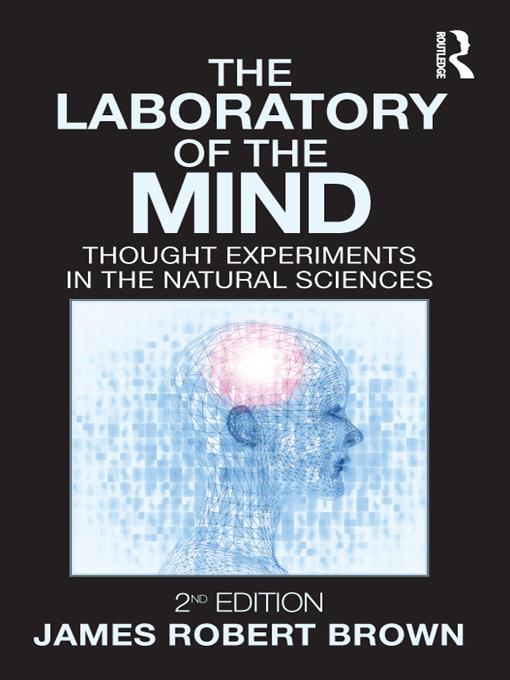
Newton's bucket, Einstein's elevator, Schrödinger's cat – these are some of the best-known examples of thought experiments in the natural sciences. But what function do these experiments perform? Are they really experiments at all? Can they help us gain a greater understanding of the natural world? How is it possible that we can learn new things just by thinking?
In this revised and updated new edition of his classic text The Laboratory of the Mind, James Robert Brown continues to defend apriorism in the physical world. This edition features two new chapters, one on “counter thought experiments” and another on the development of inertial motion. With plenty of illustrations and updated coverage of the debate between Platonic rationalism and classic empiricism, this is a lively and engaging contribution to the field of philosophy of science.
Zahle einfach mit Karte, Klarna, Apple Pay oder Google Pay. Nicht zufrieden? Du hast immer ein 14-tägiges Widerrufsrecht. Lies mehr in unseren AGB. Hast du Fragen, schreib uns eine E-Mail an hello@memmo.org.
Memmo macht das Lernen einfacher – wo auch immer du bist. Bei uns findest du deine Kursbücher und smarte Lerntools an einem Ort: Zusammenfassungen, Quizzes, Podcasts und Lernkarten. Und Ted, dein Lernbuddy, beantwortet alles, was du wissen möchtest. Über 50.000 Studierende lernen bereits hier – gemacht, damit du schneller lernst und weniger Stress hast.