
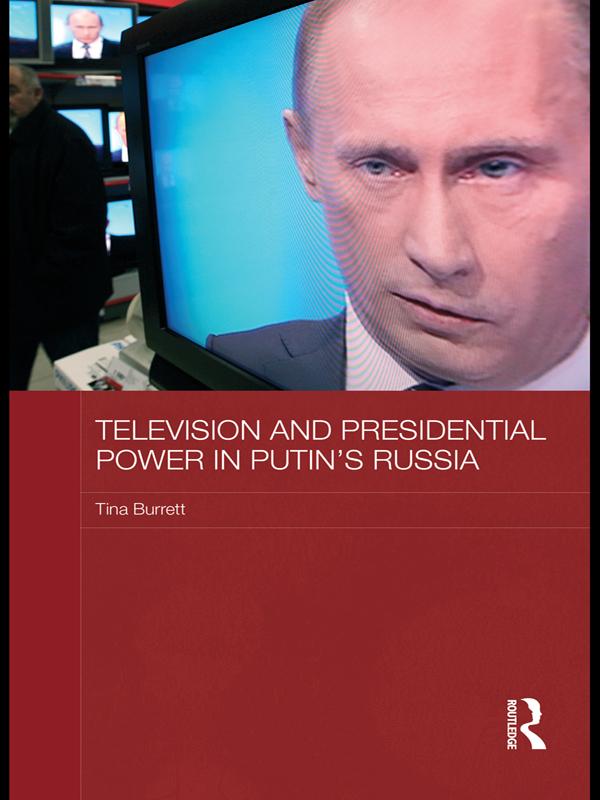
As a new president takes power in Russia, this book provides an analysis of the changing relationship between control of Russian television media and presidential power during the tenure of President Vladimir Putin. It argues that the conflicts within Russia’s political and economic elites, and President Putin’s attempts to rebuild the Russian state after its fragmentation during the Yeltsin administration, are the most significant causes of changes in Russian media. Tina Burrett demonstrates that President Putin sought to increase state control over television as part of a larger programme aimed at strengthening the power of the state and the position of the presidency at its apex, and that such control over the media was instrumental to the success of the president’s wider systemic changes that have redefined the Russian polity.
The book also highlights the ways in which oligarchic media owners in Russia used television for their own political purposes, and that media manipulation was not the exclusive preserve of the Kremlin, but a common pattern of behaviour in elite struggles in the post-Soviet era. Basing its analysis predominately on interviews with key players in the Moscow media and political elites, and on secondary sources drawn from the Russian and Western media, the book examines broad themes that have been the subject of constant media interest, and have relevance beyond the confines of Russian politics.
Zahle einfach mit Karte, Klarna, Apple Pay oder Google Pay. Nicht zufrieden? Du hast immer ein 14-tägiges Widerrufsrecht. Lies mehr in unseren AGB. Hast du Fragen, schreib uns eine E-Mail an hello@memmo.org.
Memmo macht das Lernen einfacher – wo auch immer du bist. Bei uns findest du deine Kursbücher und smarte Lerntools an einem Ort: Zusammenfassungen, Quizzes, Podcasts und Lernkarten. Und Ted, dein Lernbuddy, beantwortet alles, was du wissen möchtest. Über 50.000 Studierende lernen bereits hier – gemacht, damit du schneller lernst und weniger Stress hast.