
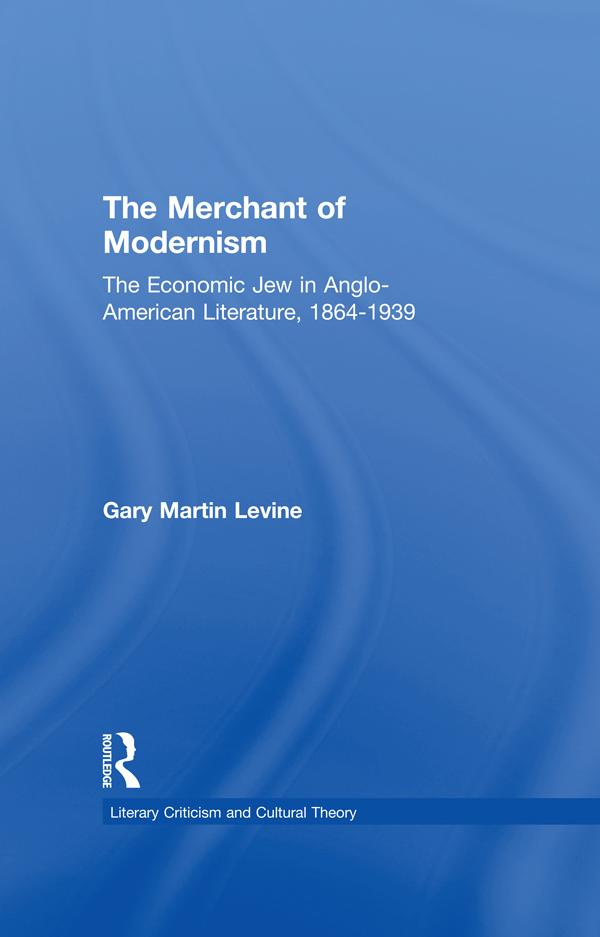
The Merchant of Modernism examines how the figure of the economic Jew symbolizes the struggle of authors from Dickens to Pound to reconcile their critique of capitalism with their own literary practices and how the shifting of the representations of this figure parallels the development of literary Modernism. From the sudden rise of the Victorian stock market to the Great Depression, the prominence of economic Jews in the writings of Charles Dickens, George Eliot, Edith Wharton, Frank Norris, Mark Twain, Henry James, Abraham Cahan, F. Scott Fitzgerald, Ernest Hemingway, Willa Cather, T.S. Eliot, D.H. Lawrence, Wyndham Lewis, Ezra Pound, and James Joyce documents major shifts and events in capitalism, their impact on literature, and advances in economic thought. The Merchant of Modernism provides a sophisticated analysis of the role of economic history and economic thought in shaping both literary Modernism and modern anti-Semitism.
Zahle einfach mit Karte, Klarna, Apple Pay oder Google Pay. Nicht zufrieden? Du hast immer ein 14-tägiges Widerrufsrecht. Lies mehr in unseren AGB. Hast du Fragen, schreib uns eine E-Mail an hello@memmo.org.
Memmo macht das Lernen einfacher – wo auch immer du bist. Bei uns findest du deine Kursbücher und smarte Lerntools an einem Ort: Zusammenfassungen, Quizzes, Podcasts und Lernkarten. Und Ted, dein Lernbuddy, beantwortet alles, was du wissen möchtest. Über 50.000 Studierende lernen bereits hier – gemacht, damit du schneller lernst und weniger Stress hast.