
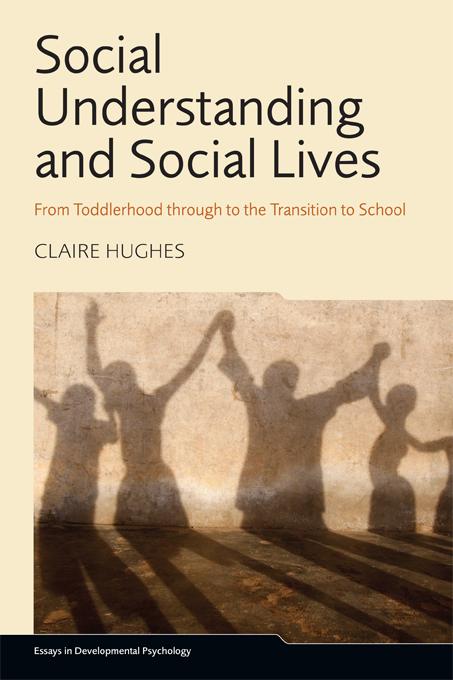
Winner of the British Psychological Society Book Award (Academic Monograph category) 2013!
Over the past thirty years, researchers have documented a remarkable growth in children’s social understanding between toddlerhood and the early school years. However, it is still unclear why some children’s awareness of others' thoughts and feelings lags so far behind that of their peers. Based on research that spans an extended developmental period, this book examines this question from both social and cognitive perspectives, and investigates the real-life significance of individual differences in theory of mind.
After tracing the key age-related changes in the development of theory of mind, this book examines individual differences in relation to children’s cognitive abilities and their social experiences. Why might language or executive function matter for children’s social understanding? And how do children’s linguistic environments and relationships with parents and siblings contribute to their ability to reflect on people’s thoughts and feelings?
The book also reviews the evidence for predictive links between early social understanding and later social behaviour. Using information gathered from classmates, teachers and the children themselves, the author investigates links between individual differences in early social understanding and in the quality of children’s interactions with friends, in their ability to resolve conflict, and in diverse aspects of school adjustment.
Drawing on rich observational data gathered in this extended longitudinal study, as well as skills acquired during her early experimental studies of children with autism and a six year collaboration with Professor Judy Dunn, the author integrates both cognitive and social accounts of theory of mind. The book is ideal reading for researchers actively working in the field, graduate and undergraduate students specializing in developmental psychology, educational and health professionals, and parents interested in learning about children’s early social development.
Zahle einfach mit Karte, Klarna, Apple Pay oder Google Pay. Nicht zufrieden? Du hast immer ein 14-tägiges Widerrufsrecht. Lies mehr in unseren AGB. Hast du Fragen, schreib uns eine E-Mail an hello@memmo.org.
Memmo macht das Lernen einfacher – wo auch immer du bist. Bei uns findest du deine Kursbücher und smarte Lerntools an einem Ort: Zusammenfassungen, Quizzes, Podcasts und Lernkarten. Und Ted, dein Lernbuddy, beantwortet alles, was du wissen möchtest. Über 50.000 Studierende lernen bereits hier – gemacht, damit du schneller lernst und weniger Stress hast.