
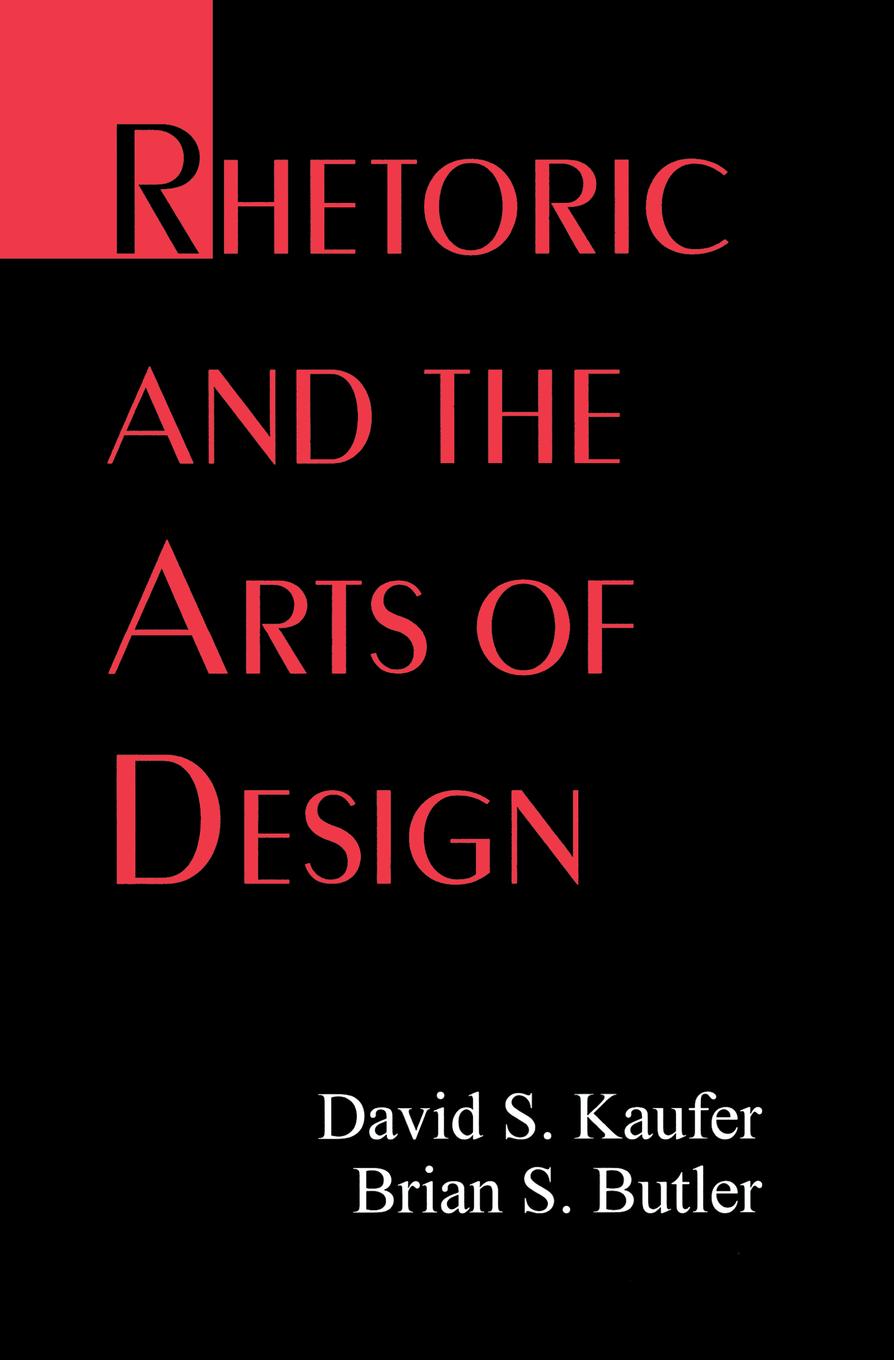
The design arts -- from the design of buildings and machines to software and interfaces -- are associated with types of knowledge and performance thought to be structured, modular, and systematic. Such arts have become increasingly prestigious in our technocratic society. Since Aristotle, the art of rhetoric was conceived as a loosely structured "practical" art thought to be limited in the extent to which it could mimic more precise subject matters. The art of rhetoric has been controversial since classical times, but its status has sunk even lower since the industrial revolution -- a point when civic cultures began to cede authority and control to the cultures of specialized experts. Many sympathizers of rhetoric have resisted its decline by calling for a civic art of public discourse to stand in opposition to a technocratic specialized discourse that has come, increasingly, to disenfranchise the ordinary citizen.
This is the first book to question the rhetoric/technical knowledge split from a more fundamental perspective. To get some perspective on what is at stake in rhetoric's traditional classification as a "practical" art, the authors:
* explore the distinction between practical and design arts;
* enumerate the various criteria cited in the literature for qualifying a cluster of knowledge and performative skills to count as an art of design;
* show how the knowledge and performative skills associated with the art of rhetoric meet the major requirements of design knowledge;
* propose a general architecture of rhetorical design, one descriptive both of civic address and specialized academic argument;
* turn to the Lincoln/Douglas debates to embody and provide some empirical support and illustration for their architecture;
* demonstrate how Lincoln and Douglas can be thought of as expert designers whose rhetoric is highly structured and modular; and
* explain how the rhetoric of both rhetorical agents can be represented in the layers and modules that one needs to display plans for buildings, software, or other design artifacts.
These layers and modules are not just post hoc annotations of the debates; they also illuminate new and systematic ways for viewing the debates -- and by implication, other specimens of rhetoric -- in terms of strategies of artistic production. Kaufer and Butler conclude their presentation by citing some of the research and educational implications that follow from housing rhetoric within the family of design arts.
Zahle einfach mit Karte, Klarna, Apple Pay oder Google Pay. Nicht zufrieden? Du hast immer ein 14-tägiges Widerrufsrecht. Lies mehr in unseren AGB. Hast du Fragen, schreib uns eine E-Mail an hello@memmo.org.
Memmo macht das Lernen einfacher – wo auch immer du bist. Bei uns findest du deine Kursbücher und smarte Lerntools an einem Ort: Zusammenfassungen, Quizzes, Podcasts und Lernkarten. Und Ted, dein Lernbuddy, beantwortet alles, was du wissen möchtest. Über 50.000 Studierende lernen bereits hier – gemacht, damit du schneller lernst und weniger Stress hast.