
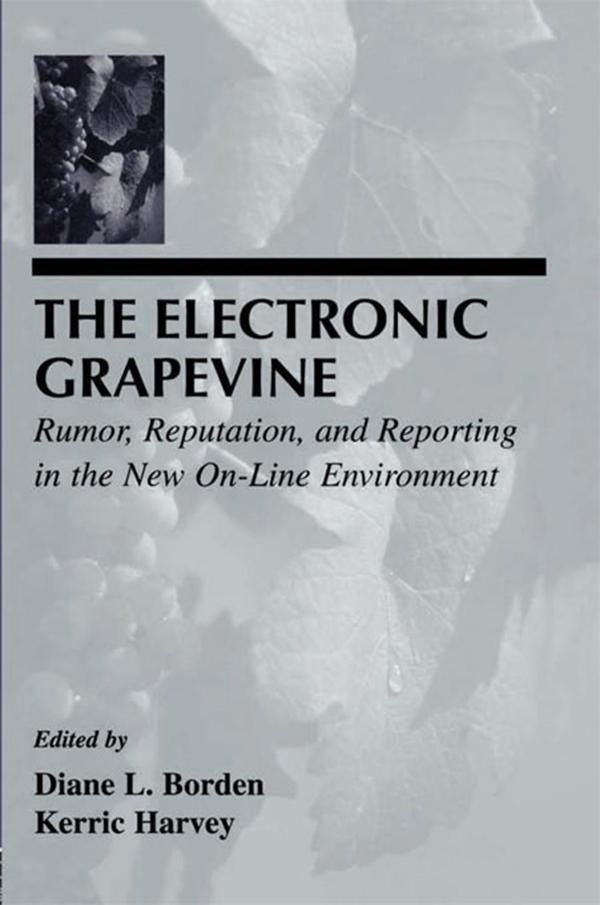
The widespread use of the Internet as a tool for gathering and disseminating information raises serious questions for journalists--and their readers--about the process of reporting information. Using virtual sources and publishing online is changing the way in which journalism takes place and its effect on the society it serves.
USE LAST THREE PARAGRAPHS ONLY FOR GENERAL CATALOGS... The Electronic Grapevine explores the use of online media by reporters in the United States, and examines the impact that usage may have on how journalism is framed in the cultural sphere, as well as how it is conducted in the professional one. It contains a mix of material examining how it feels to "do" online journalism, how it affects those who consume it, different ways that media scholars go about trying to understand it better, and the likely social and cultural impact of Internet-like technologies on the public, at whom all this electronic information is eventually aimed.
Drawing from the emerging scholarly work in the field and from the real-life experiences of working journalists, Borden and Harvey collect contributions that examine why journalists use the Internet, what changes it makes in how they approach their jobs, and what differences they see in conducting their daily newsgathering with this medium rather than other methods. The volume also analyses when and why journalists do not use online media and what the impact of the decision to use or not use the Internet may mean for the outer world, whose perceptions of itself are so often shaped by journalistic portrait.
This series of thought-provoking, original essays explores the impact of computer-based information and communication services on traditional journalistic routines and practices, and thereby addresses a critical gap in the scholarly literature on communication, law, and culture. Distinguishing between linkage devices like the Internet, and database resources such as LEXIS/NEXIS, America Online, and others, this book examines the ways in which both types of online services may reshape and redefine not only the products of journalistic effort, but the newsgathering process itself.
Zahle einfach mit Karte, Klarna, Apple Pay oder Google Pay. Nicht zufrieden? Du hast immer ein 14-tägiges Widerrufsrecht. Lies mehr in unseren AGB. Hast du Fragen, schreib uns eine E-Mail an hello@memmo.org.
Memmo macht das Lernen einfacher – wo auch immer du bist. Bei uns findest du deine Kursbücher und smarte Lerntools an einem Ort: Zusammenfassungen, Quizzes, Podcasts und Lernkarten. Und Ted, dein Lernbuddy, beantwortet alles, was du wissen möchtest. Über 50.000 Studierende lernen bereits hier – gemacht, damit du schneller lernst und weniger Stress hast.