
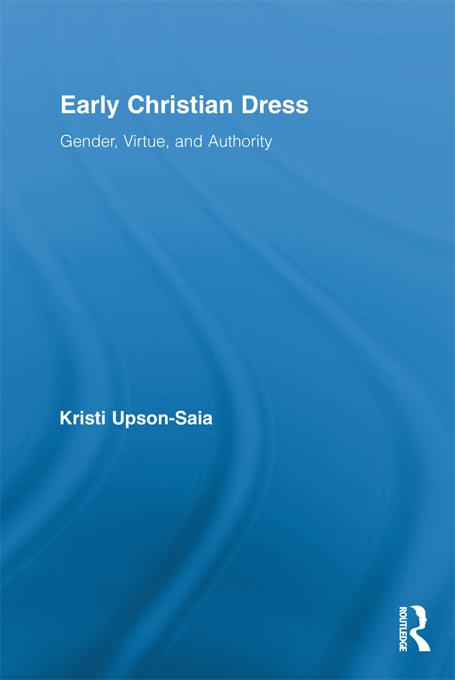
Early Christian Dress is the first full-length monograph on the subject of dress in early Christianity. It pays attention to the ways in which dress expressed and shaped Christian identity, the role dress played in Christians’ rivalries with pagan neighbours, and especially to the ways in which notions of gender were culled and revised in the process. Although many scholars have argued that gender in late antiquity was a performed and embodied category, few have paid attention to the ways in which dress and physical appearances were implicated in the understanding of femininity and masculinity. This study addresses that gap, revealing the amount of sartorial work necessary to secure stable gender categories in the worlds of early Imperial pagans and late ancient Christians.
This study analyzes several vigorous discussions and debates that arose over Christian women’s dress. It examines how Christians interpreted their dress—especially the dress of female ascetics—as evidence of Christianity’s advanced morality and piety, a morality and piety that was coded "masculine." Yet even Christian leaders who championed ascetic women’s ability to achieve a degree of virility in terms of their virtue and spiritual status were troubled when ascetics’ dress threatened to materially dissolve gender categories, difference, and hierarchies. In the end, the study enables us to gain a broader view of how gender was constructed, perceived, and contested in early Christianity.
Zahle einfach mit Karte, Klarna, Apple Pay oder Google Pay. Nicht zufrieden? Du hast immer ein 14-tägiges Widerrufsrecht. Lies mehr in unseren AGB. Hast du Fragen, schreib uns eine E-Mail an hello@memmo.org.
Memmo macht das Lernen einfacher – wo auch immer du bist. Bei uns findest du deine Kursbücher und smarte Lerntools an einem Ort: Zusammenfassungen, Quizzes, Podcasts und Lernkarten. Und Ted, dein Lernbuddy, beantwortet alles, was du wissen möchtest. Über 50.000 Studierende lernen bereits hier – gemacht, damit du schneller lernst und weniger Stress hast.