
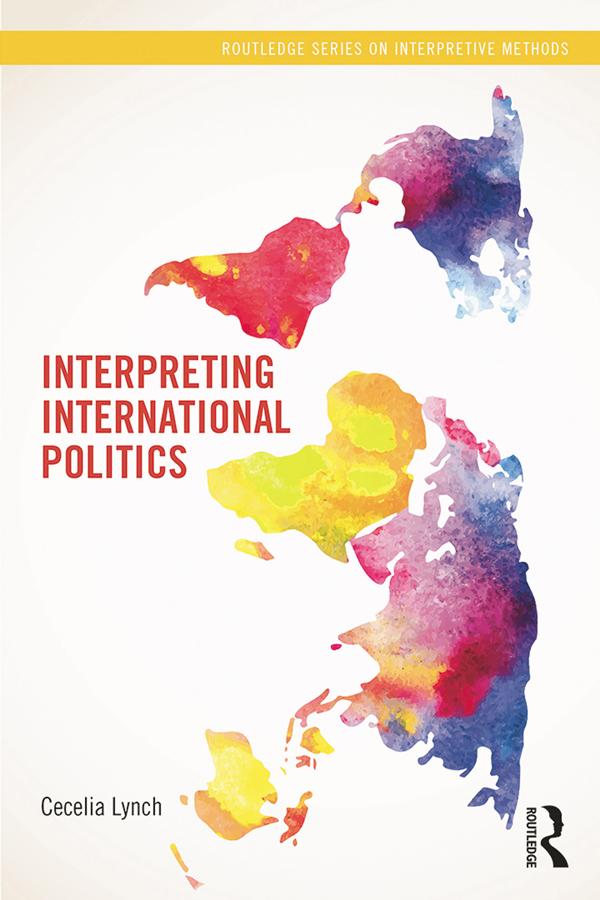
Interpreting International Politics addresses each of the major, "traditional" subfields in International Relations: International Law and Organization, International Security, and International Political Economy. But how are interpretivist methods and concerns brought to bear on these topics? In this slim volume Cecelia Lynch focuses on the philosophy of science and conceptual issues that make work in international relations distinctly interpretive. This work both legitimizes and demonstrates the necessity of post- and non-positivist scholarship.
Interpretive approaches to the study of international relations span not only the traditional areas of security, international political economy, and international law and organizations, but also emerging and newer areas such as gender, race, religion, secularism, and continuing issues of globalization. By situating, describing, and analyzing major interpretive works in each of these fields, the book draws out the critical research challenges that are posed by and the progress that is made by interpretive work. Furthermore, the book also pushes forward interpretive insights to areas that have entered the IR radar screen more recently, including race and religion, demonstrating how work in these areas can inform all subfields of the discipline and suggesting paths for future research.
Zahle einfach mit Karte, Klarna, Apple Pay oder Google Pay. Nicht zufrieden? Du hast immer ein 14-tägiges Widerrufsrecht. Lies mehr in unseren AGB. Hast du Fragen, schreib uns eine E-Mail an hello@memmo.org.
Memmo macht das Lernen einfacher – wo auch immer du bist. Bei uns findest du deine Kursbücher und smarte Lerntools an einem Ort: Zusammenfassungen, Quizzes, Podcasts und Lernkarten. Und Ted, dein Lernbuddy, beantwortet alles, was du wissen möchtest. Über 50.000 Studierende lernen bereits hier – gemacht, damit du schneller lernst und weniger Stress hast.