
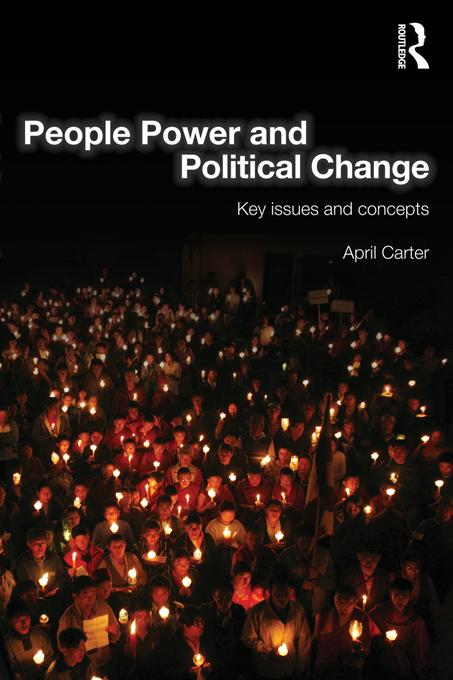
This book examines the upsurge in mass popular protest against undemocratic regimes. Relating early revolutions to recent global trends and protests, it examines the significance of ‘people power’ to democracy.
Taking a comparative approach, this text analyses unarmed uprisings in Iran 1977-79, Latin America and Asia in the 1980s, Africa from 1989-1992, 1989 in Eastern Europe and ex-Soviet states after 2000, right up to the 2011 ‘Arab Spring’. The author assesses the influence on people power of global politics and trends, such as the growth of international governmental organizations and international law, citizen networks operating across borders, and emerging media (like Twitter and Wikileaks). Although stressing the positive potential of people power, this text also examines crucial problems of repression, examples of failure and potential political problems, disintegration of empires and the role of power rivalries. Drawing from contemporary debates about democratization and literatures on power, violence and nonviolence, from both academic sources and media perspectives, this text builds an incisive analytical argument about the changing nature of power itself.
People Power and Political Change is a must read for students and scholars of democratic theory, international politics and current affairs.
Zahle einfach mit Karte, Klarna, Apple Pay oder Google Pay. Nicht zufrieden? Du hast immer ein 14-tägiges Widerrufsrecht. Lies mehr in unseren AGB. Hast du Fragen, schreib uns eine E-Mail an hello@memmo.org.
Memmo macht das Lernen einfacher – wo auch immer du bist. Bei uns findest du deine Kursbücher und smarte Lerntools an einem Ort: Zusammenfassungen, Quizzes, Podcasts und Lernkarten. Und Ted, dein Lernbuddy, beantwortet alles, was du wissen möchtest. Über 50.000 Studierende lernen bereits hier – gemacht, damit du schneller lernst und weniger Stress hast.