
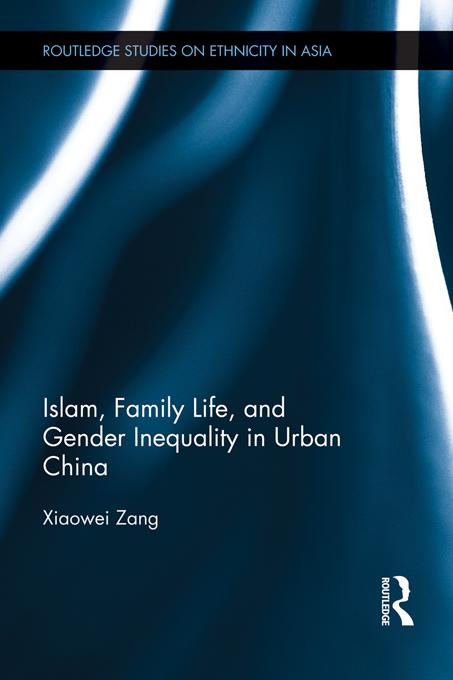
This book studies the relationship between Islam, family processes, and gender inequality among Uyghur Muslims in Ürümchi, China. Empirically, it shows in quantitative terms the extent of gender inequalities among Uyghur Muslims in Ürümchi and tests whether the gender inequalities are a difference in kind or in degree. It examines five aspects of gender inequality: employment, income, household task accomplishment, home management, and spousal power. Theoretically, it investigates how Islamic affiliation and family life affect Uyghur women’s status.
Zang’s research involved rare and privileged access to a setting which is difficult for foreign scholars to study due to political restrictions. The data are drawn from fieldwork in Ürümchi between 2005 and 2008, which include a survey of 577 families, field observations, and 200 in-depth interviews with local Uyghurs. The book combines qualitative and quantitative data and methods to study gendered behavior and outcomes. The author’s study reinterprets family power and offers a more nuanced analysis of gender and domestic power in China and makes a pioneering effort to study spousal power, gender inequality in labor market outcomes, and gender inequality in household chores among members of ethnic minorities in China.
The book will be of interest to students and scholars of ethnic studies, Chinese studies, Asian anthropology and cultural sociology.
Zahle einfach mit Karte, Klarna, Apple Pay oder Google Pay. Nicht zufrieden? Du hast immer ein 14-tägiges Widerrufsrecht. Lies mehr in unseren AGB. Hast du Fragen, schreib uns eine E-Mail an hello@memmo.org.
Memmo macht das Lernen einfacher – wo auch immer du bist. Bei uns findest du deine Kursbücher und smarte Lerntools an einem Ort: Zusammenfassungen, Quizzes, Podcasts und Lernkarten. Und Ted, dein Lernbuddy, beantwortet alles, was du wissen möchtest. Über 50.000 Studierende lernen bereits hier – gemacht, damit du schneller lernst und weniger Stress hast.