
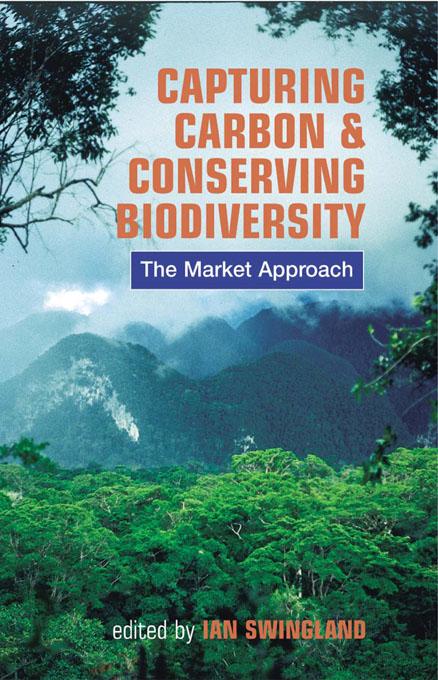
For decades conservation has been based on the donor-driven principle. It hasn't worked. For centuries, environmental pollution or degradation has been addressed by the same attitude: the 'Polluter Pays' principle. That hasn't worked either. The cycle has to stop. But while everyone talks about using a market-driven approach, few know how to do it. Faced with the situation on the ground what do you do? What is happening? How can you engage a system so that it is self-sustaining and the people self-motivated? This study explores how the growing market in carbon can help to conserve carbon-based life forms. It discusses how reducing global warming and saving biodiversity can both be achieved with the right market conditions. The contributors include conservation biologists, ecologists, biologists, economists, lawyers, community and tribal specialists, financial specialists, market makers, environment specialists, climatologists, resource managers, atmospheric scientists, project developers and corporate fund managers.
Zahle einfach mit Karte, Klarna, Apple Pay oder Google Pay. Nicht zufrieden? Du hast immer ein 14-tägiges Widerrufsrecht. Lies mehr in unseren AGB. Hast du Fragen, schreib uns eine E-Mail an hello@memmo.org.
Memmo macht das Lernen einfacher – wo auch immer du bist. Bei uns findest du deine Kursbücher und smarte Lerntools an einem Ort: Zusammenfassungen, Quizzes, Podcasts und Lernkarten. Und Ted, dein Lernbuddy, beantwortet alles, was du wissen möchtest. Über 50.000 Studierende lernen bereits hier – gemacht, damit du schneller lernst und weniger Stress hast.
Das könnte dir auch gefallen
Buch kaufen0