
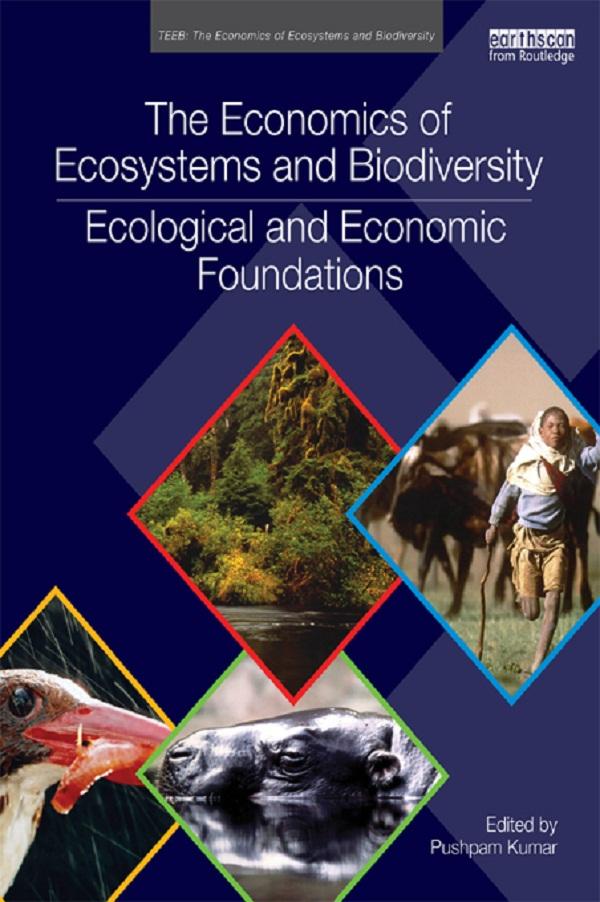
Human well-being relies critically on ecosystem services provided by nature. Examples include water and air quality regulation, nutrient cycling and decomposition, plant pollination and flood control, all of which are dependent on biodiversity. They are predominantly public goods with limited or no markets and do not command any price in the conventional economic system, so their loss is often not detected and continues unaddressed and unabated. This in turn not only impacts human well-being, but also seriously undermines the sustainability of the economic system.
It is against this background that TEEB: The Economics of Ecosystems and Biodiversity project was set up in 2007 and led by the United Nations Environment Programme to provide a comprehensive global assessment of economic aspects of these issues. This book, written by a team of international experts, represents the scientific state of the art, providing a comprehensive assessment of the fundamental ecological and economic principles of measuring and valuing ecosystem services and biodiversity, and showing how these can be mainstreamed into public policies.
This volume and subsequent TEEB outputs will provide the authoritative knowledge and guidance to drive forward the biodiversity conservation agenda for the next decade.
Zahle einfach mit Karte, Klarna, Apple Pay oder Google Pay. Nicht zufrieden? Du hast immer ein 14-tägiges Widerrufsrecht. Lies mehr in unseren AGB. Hast du Fragen, schreib uns eine E-Mail an hello@memmo.org.
Memmo macht das Lernen einfacher – wo auch immer du bist. Bei uns findest du deine Kursbücher und smarte Lerntools an einem Ort: Zusammenfassungen, Quizzes, Podcasts und Lernkarten. Und Ted, dein Lernbuddy, beantwortet alles, was du wissen möchtest. Über 50.000 Studierende lernen bereits hier – gemacht, damit du schneller lernst und weniger Stress hast.