
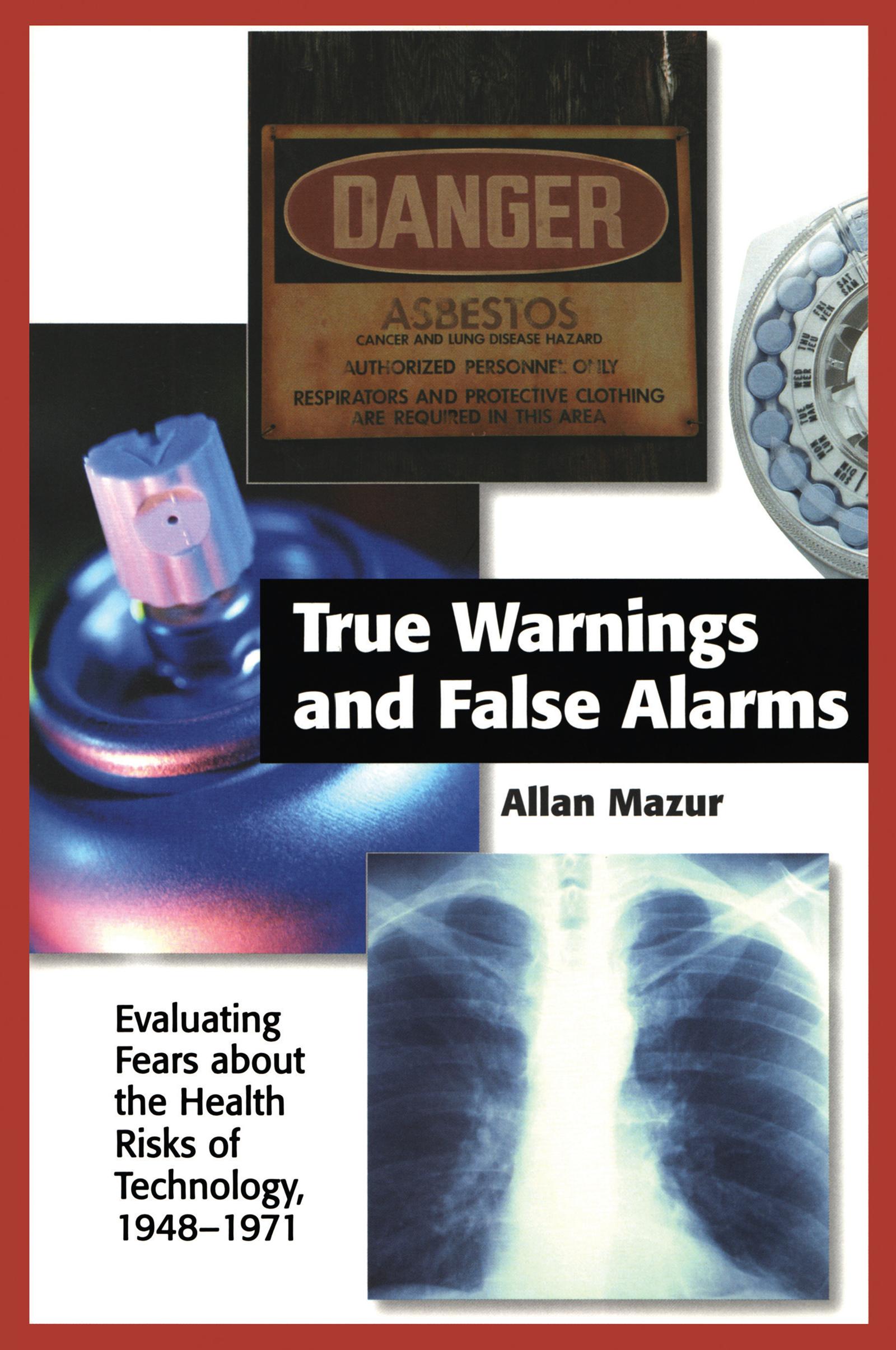
Given time, scientists reach consensus about the truth or falsity of a wide range of alleged hazards. Today, there is broad agreement that CFCs destroy stratospheric ozone. On the other hand, research does not support claims that electromagnetic fields from transmission lines cause a noticeable increase of leukemia. But new allegations continuously arise. Are manufactured chemicals in the environment distorting normal hormonal processes in our bodies? Are genetically modified foods a cause for concern?
Addressing one of the most vexing problems in risk policy, Allan Mazur asks how we can tell, at an early stage, how seriously we should take a new warning. To identify hallmarks that could help predict the truth or falsity of an alleged hazard, Mazur analyzes 31 health warnings raised during the 1950s and 1960s about diverse technologies, including fluoridation, DDT, cyclamate, nuclear weapons testing, and birth control pills. Among his considerations are the initial source of an alarm, the biases held by its primary 'sponsors,' and the type of media coverage it receives. With 30 to 50 years of hindsight, he identifies characteristics - apparent from the outset of a controversy - that most effectively distinguish true warnings from false alarms. Early recognition and a timely response to a genuine hazard are important to protect our environment, health, and economic well-being. But if we act quickly and a warning turns out to be false, money is wasted, people are needlessly frightened, regulators lose credibility, and our ability to appropriately handle the next set of risks is compromised. Mazur's findings do not provide certainty about which of today's warnings will prove true and which will prove false. But they do help us to make informed judgments about where it is best and most reasonable to direct our worries and resources.
Zahle einfach mit Karte, Klarna, Apple Pay oder Google Pay. Nicht zufrieden? Du hast immer ein 14-tägiges Widerrufsrecht. Lies mehr in unseren AGB. Hast du Fragen, schreib uns eine E-Mail an hello@memmo.org.
Memmo macht das Lernen einfacher – wo auch immer du bist. Bei uns findest du deine Kursbücher und smarte Lerntools an einem Ort: Zusammenfassungen, Quizzes, Podcasts und Lernkarten. Und Ted, dein Lernbuddy, beantwortet alles, was du wissen möchtest. Über 50.000 Studierende lernen bereits hier – gemacht, damit du schneller lernst und weniger Stress hast.