
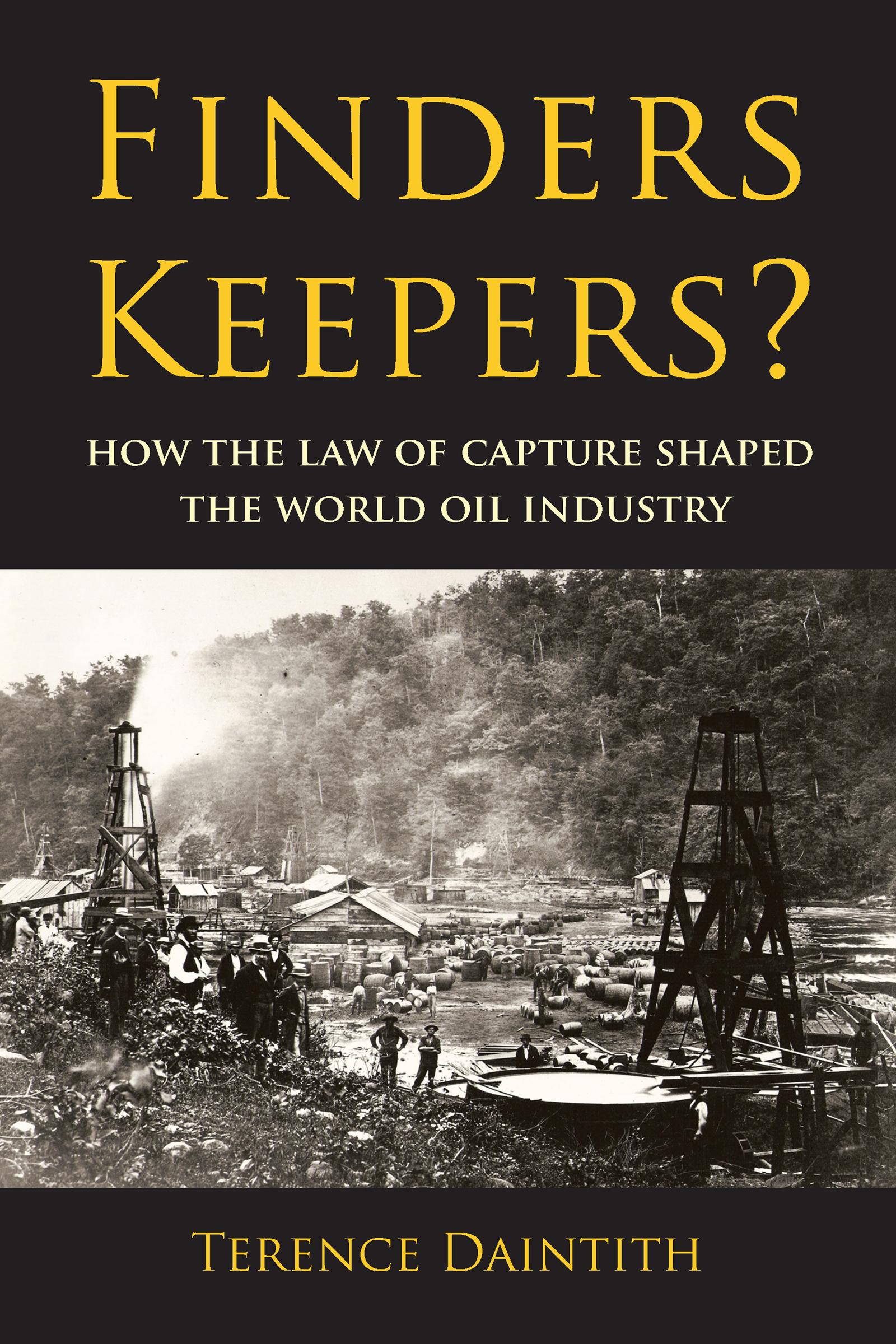
Since the beginnings of the oil industry, production activity has been governed by the 'law of capture,' dictating that one owns the oil recovered from one's property even if it has migrated from under neighboring land. This 'finders keepers' principle has been excoriated by foreign critics as a 'law of the jungle' and identified by American commentators as the root cause of the enormous waste of oil and gas resulting from US production methods in the first half of the twentieth century. Yet while in almost every other country the law of capture is today of marginal significance, it continues in full vigour in the United States, with potentially wasteful results.
In this richly documented account, Terence Daintith adopts a historical and comparative perspective to show how legal rules, technical knowledge (or the lack of it) and political ideas combined to shape attitudes and behavior in the business of oil production, leading to the original adoption of the law of capture, its consolidation in the United States, and its marginalization elsewhere.
Zahle einfach mit Karte, Klarna, Apple Pay oder Google Pay. Nicht zufrieden? Du hast immer ein 14-tägiges Widerrufsrecht. Lies mehr in unseren AGB. Hast du Fragen, schreib uns eine E-Mail an hello@memmo.org.
Memmo macht das Lernen einfacher – wo auch immer du bist. Bei uns findest du deine Kursbücher und smarte Lerntools an einem Ort: Zusammenfassungen, Quizzes, Podcasts und Lernkarten. Und Ted, dein Lernbuddy, beantwortet alles, was du wissen möchtest. Über 50.000 Studierende lernen bereits hier – gemacht, damit du schneller lernst und weniger Stress hast.