
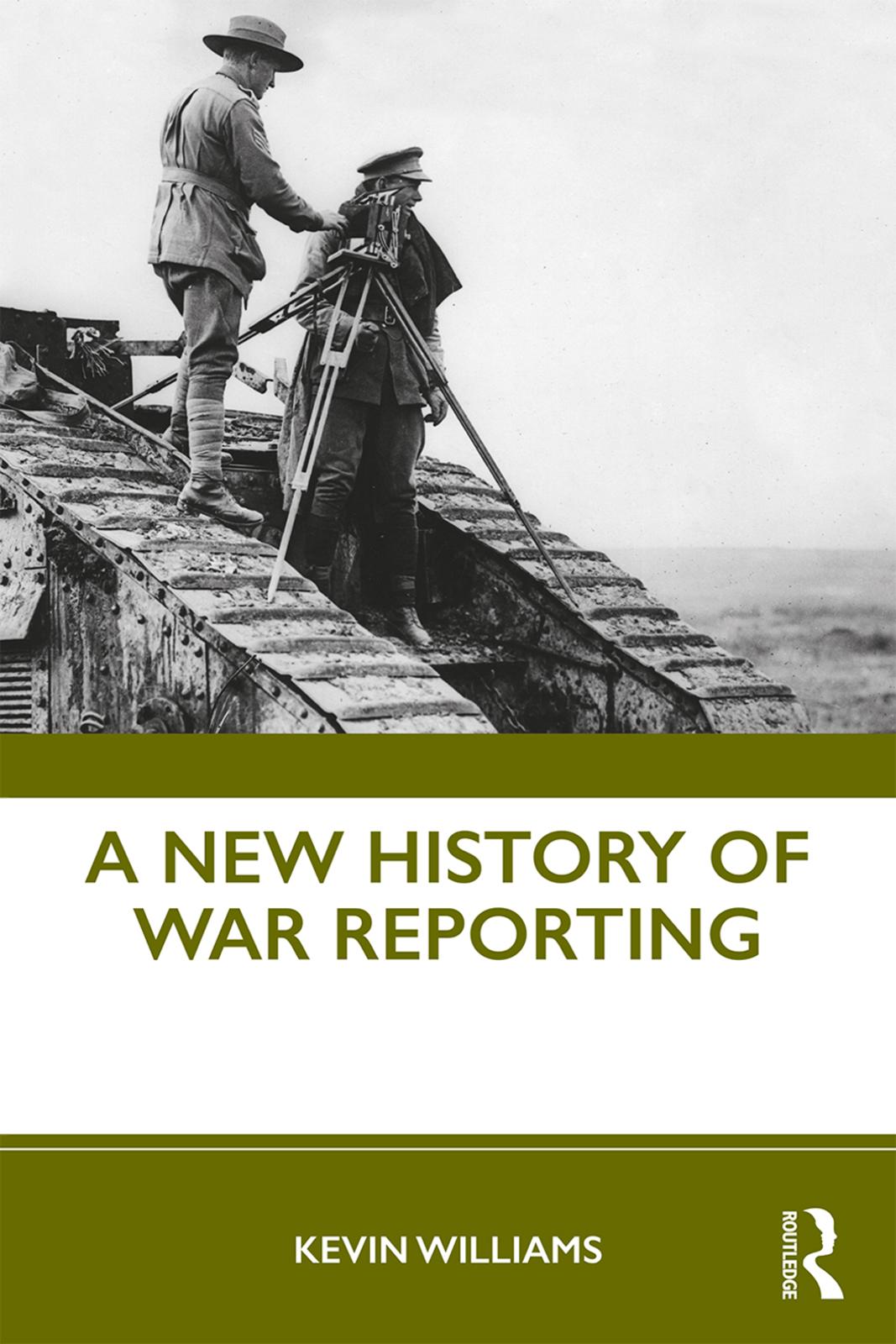
This book takes a fresh look at the history of war reporting to understand how new technology, new ways of waging war and new media conditions are changing the role and work of today’s war correspondent.
Focussing on the mechanics of war reporting and the logistical and institutional pressures on correspondents, the book further examines the role of war propaganda, accreditation and news management in shaping the evolution of the specialism. Previously neglected conflicts and correspondents are reclaimed and wars considered as key moments in the history of war reporting such as the Crimean War (1854-56) and the Great War (1914-18) are re-evaluated.
The use of objectivity as the yardstick by which to assess the performance of war correspondents is questioned. The emphasis is instead placed on war as a messy business which confronts reporters and photographers with conditions that challenge the norms of professional practice. References to the ‘demise of the war correspondent’ have accompanied the growth of the specialism since the days of William Howard Russell, the so-called father of war reporting. This highlights the fragile nature of this sub-genre of journalism and emphasises that continuity as much as change characterises the work of the war correspondent.
A thematically organised, historically rich introduction, this book is ideal for students of journalism, media and communication.
Zahle einfach mit Karte, Klarna, Apple Pay oder Google Pay. Nicht zufrieden? Du hast immer ein 14-tägiges Widerrufsrecht. Lies mehr in unseren AGB. Hast du Fragen, schreib uns eine E-Mail an hello@memmo.org.
Memmo macht das Lernen einfacher – wo auch immer du bist. Bei uns findest du deine Kursbücher und smarte Lerntools an einem Ort: Zusammenfassungen, Quizzes, Podcasts und Lernkarten. Und Ted, dein Lernbuddy, beantwortet alles, was du wissen möchtest. Über 50.000 Studierende lernen bereits hier – gemacht, damit du schneller lernst und weniger Stress hast.