
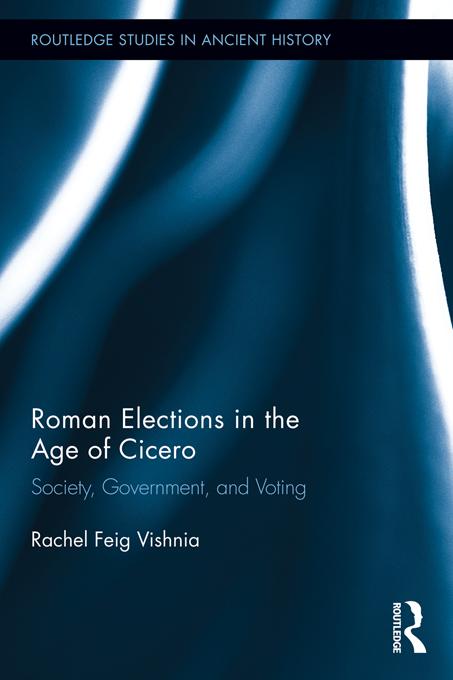
Great debate exists amongst classical historians on the nature of Roman republican government. Some contend that the Roman Republic was governed by a small group of aristocratic families that entrenched their rule by means of long-standing alliances and an intricate network of loyal clients from the lower echelons of society. Others contest the definition of the republican government as oligarchic, maintaining that the Roman elite did not operate in a political vacuum and that Polybius’ judgment, which concedes a democratic element in the Roman constitution as embodied in the powers of the popular assemblies, cannot be simply swept aside. This debate has found its way into various scholarly works, but, until now, no single volume has been dedicated specifically to elections and electioneering, a sphere where the people—according to these interpretations—played a central if not a crucial role. Roman Elections in the Age of Cicero provides new and intriguing insights into the nature of Roman republican government and the people’s actual powers, but also addresses questions relevant to elections in our own societies today.
Zahle einfach mit Karte, Klarna, Apple Pay oder Google Pay. Nicht zufrieden? Du hast immer ein 14-tägiges Widerrufsrecht. Lies mehr in unseren AGB. Hast du Fragen, schreib uns eine E-Mail an hello@memmo.org.
Memmo macht das Lernen einfacher – wo auch immer du bist. Bei uns findest du deine Kursbücher und smarte Lerntools an einem Ort: Zusammenfassungen, Quizzes, Podcasts und Lernkarten. Und Ted, dein Lernbuddy, beantwortet alles, was du wissen möchtest. Über 50.000 Studierende lernen bereits hier – gemacht, damit du schneller lernst und weniger Stress hast.