
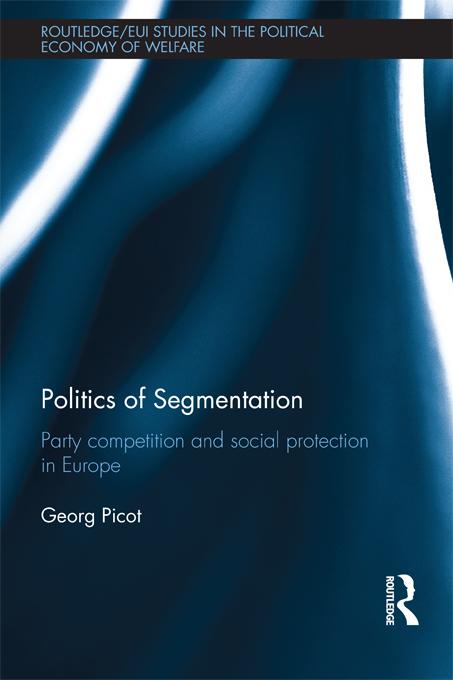
When political parties make policy decisions they are influenced by the competition they face from other parties. This book examines how party competition and party systems affect reforms of social protection. Featuring a historical comparison of Italy and Germany post-1945, the book shows how a high number of parties and ideological polarisation lead to fragmented and unequal social benefits.
Utilising a comparative approach, the author brings together two important issues in welfare state research that have been insufficiently investigated. Firstly, the complex influence of party competition on social policy-making, and second, how some social groups enjoy better social protection than others. Moving beyond the two countries of the case study, the book proposes an innovative framework for studying segmentation of social protection and applies this framework to a wider set of 15 advanced welfare states. Overall, this book draws together different strands of research on political parties and on welfare states, and introduces a new argument on how party politics shapes social policy.
An invaluable text on the political economy of the welfare state, Politics of Segmentation will be of interest to scholars of political economy, social policy and comparative politics.
Zahle einfach mit Karte, Klarna, Apple Pay oder Google Pay. Nicht zufrieden? Du hast immer ein 14-tägiges Widerrufsrecht. Lies mehr in unseren AGB. Hast du Fragen, schreib uns eine E-Mail an hello@memmo.org.
Memmo macht das Lernen einfacher – wo auch immer du bist. Bei uns findest du deine Kursbücher und smarte Lerntools an einem Ort: Zusammenfassungen, Quizzes, Podcasts und Lernkarten. Und Ted, dein Lernbuddy, beantwortet alles, was du wissen möchtest. Über 50.000 Studierende lernen bereits hier – gemacht, damit du schneller lernst und weniger Stress hast.