
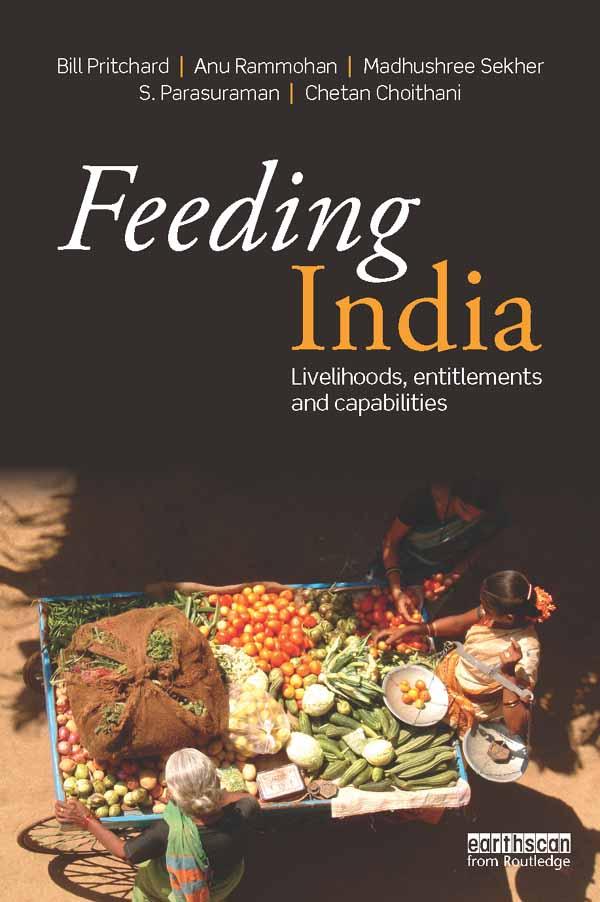
Food security is one of the twenty-first century’s key global challenges, and lessons learned from India have particular significance worldwide. Not only does India account for approximately one quarter of the world’s under-nourished persons, it also provides a worrying case of how rapid economic growth may not provide an assumed panacea to food security.
This book takes on this challenge. It explains how India’s chronic food security problem is a function of a distinctive interaction of economic, political and environmental processes. It contends that under-nutrition and hunger are lagging components of human development in India precisely because the interfaces between these aspects of the food security problem have not been adequately understood in policy-making communities. Only through an integrative approach spanning the social and environmental sciences, are the fuller dimensions of this problem revealed. A well-rounded appreciation of the problem is required, informed by the FAO’s conception of food security as encompassing availability (production), access (distribution) and utilisation (nutritional content), as well as by Amartya Sen’s notions of entitlements and capabilities.
Zahle einfach mit Karte, Klarna, Apple Pay oder Google Pay. Nicht zufrieden? Du hast immer ein 14-tägiges Widerrufsrecht. Lies mehr in unseren AGB. Hast du Fragen, schreib uns eine E-Mail an hello@memmo.org.
Memmo macht das Lernen einfacher – wo auch immer du bist. Bei uns findest du deine Kursbücher und smarte Lerntools an einem Ort: Zusammenfassungen, Quizzes, Podcasts und Lernkarten. Und Ted, dein Lernbuddy, beantwortet alles, was du wissen möchtest. Über 50.000 Studierende lernen bereits hier – gemacht, damit du schneller lernst und weniger Stress hast.