
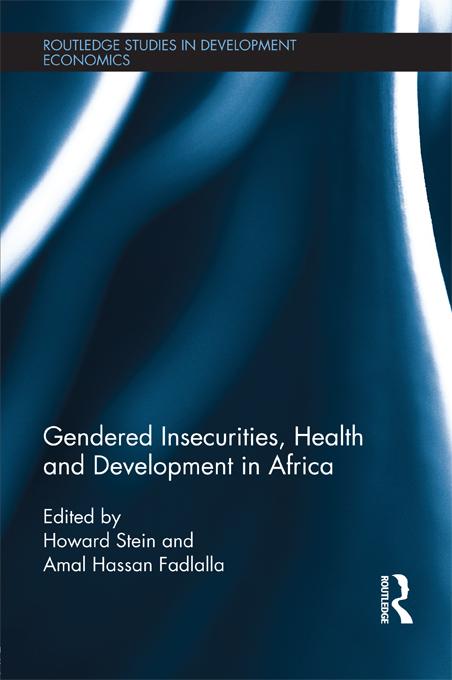
The concept of security has often narrowly focused on issues surrounding the protection of national borders from outside threats. However, a richer idea of human security has become increasingly important in the past decade or so. The aim is to incorporate various dimensions of the downside risks affecting the generalized well-being or dignity of people. Despite this rising prominence, the discourses surrounding human security have neglected to address the topic of gender, particularly how issues of poverty and underdevelopment impact women’s and men’s experiences and strategies differently.
Since its introduction in the 1994 UNDP Human Development report, the idea of human security has become increasingly influential among academics and international development practitioners. However, gendered dimensions of human security have not attracted enough attention, despite their vital importance. Women are disproportionately more vulnerable to disease and other forms of human insecurity due to differences in entitlement, empowerment and an array of other ecological and socio-economic factors. These gendered insecurities are inextricably linked to poverty, and as a result, the feminization of poverty is a growing phenomenon worldwide. The contributors to this volume rely on a gender-focused analysis to consider a number of issues central to human security and development in Africa, including food security, environmental health risks, discrimination within judicial and legal systems, gendered aspects of HIV/AIDS transmission and treatment technologies, neoliberalism and poverty alleviation strategies, and conflict and women’s political activism.
The gender focus of this volume points to the importance of power relationships and policy variability underlying human insecurities in the African context. The insights of this book offer the potential for an improved human security framework, one that embraces a more complex and context-specific analysis of the issues of risk and vulnerability, therefore expanding the capacities of the human security framework to safeguard the livelihoods of the most vulnerable populations.
Zahle einfach mit Karte, Klarna, Apple Pay oder Google Pay. Nicht zufrieden? Du hast immer ein 14-tägiges Widerrufsrecht. Lies mehr in unseren AGB. Hast du Fragen, schreib uns eine E-Mail an hello@memmo.org.
Memmo macht das Lernen einfacher – wo auch immer du bist. Bei uns findest du deine Kursbücher und smarte Lerntools an einem Ort: Zusammenfassungen, Quizzes, Podcasts und Lernkarten. Und Ted, dein Lernbuddy, beantwortet alles, was du wissen möchtest. Über 50.000 Studierende lernen bereits hier – gemacht, damit du schneller lernst und weniger Stress hast.