
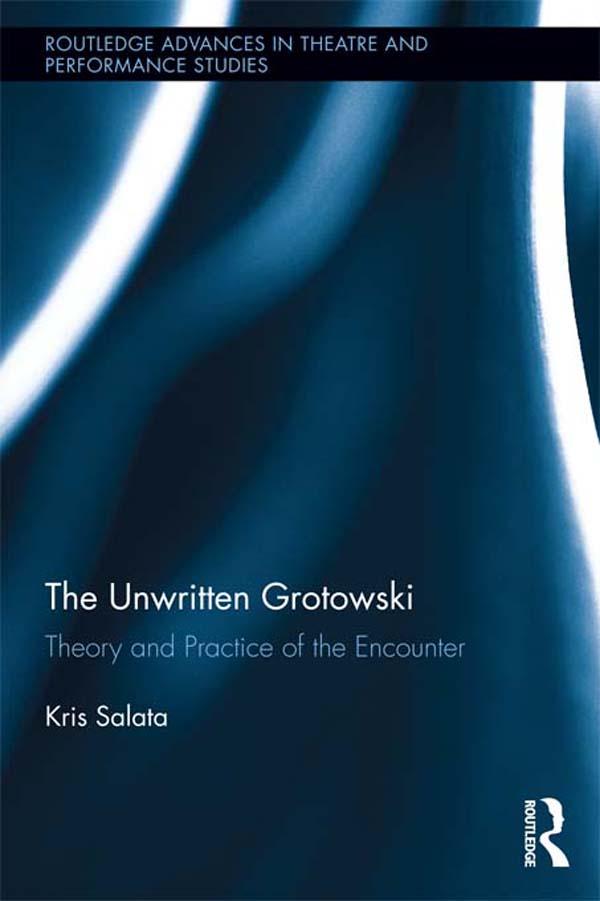
This book gives a new view on the legacy of Jerzy Grotowski (1933-1999), one of the central, and yet misunderstood, figures who shaped 20th-century theatre, focusing on his least known last phase of work on ancient songs and the craft of the performer. Salata posits Grotowski’s work as philosophical practice, and more particularly, as practical research in the phenomenology of being, arguing that Grotowski’s departure from theatrical productions (and thus critical consideration) resulted from his uncompromising pursuit of one central problem, "What does it mean to reveal oneself?" — the very question that drove his stage directing work. The book demonstrates that the answer led him through the path of gradually stripping the theatrical phenomenon down to its most elemental aspect, which shows itself through the craft of the performer as a non-representational event. This particular quality released at the heights of the art of the performer is referred to as aliveness, or true liveness in this study in order to shift scholarly focus onto something that has always fascinated great theatre practitioners, including Stanislavski and Grotowski, and of which academic scholarship has limited grasp. Salata’s theoretical analysis of aliveness reaches out to phenomenology and a broad range of post-structural philosophy and critical theory, through which Grotowski’s project is portrayed as philosophical practice.
Zahle einfach mit Karte, Klarna, Apple Pay oder Google Pay. Nicht zufrieden? Du hast immer ein 14-tägiges Widerrufsrecht. Lies mehr in unseren AGB. Hast du Fragen, schreib uns eine E-Mail an hello@memmo.org.
Memmo macht das Lernen einfacher – wo auch immer du bist. Bei uns findest du deine Kursbücher und smarte Lerntools an einem Ort: Zusammenfassungen, Quizzes, Podcasts und Lernkarten. Und Ted, dein Lernbuddy, beantwortet alles, was du wissen möchtest. Über 50.000 Studierende lernen bereits hier – gemacht, damit du schneller lernst und weniger Stress hast.