
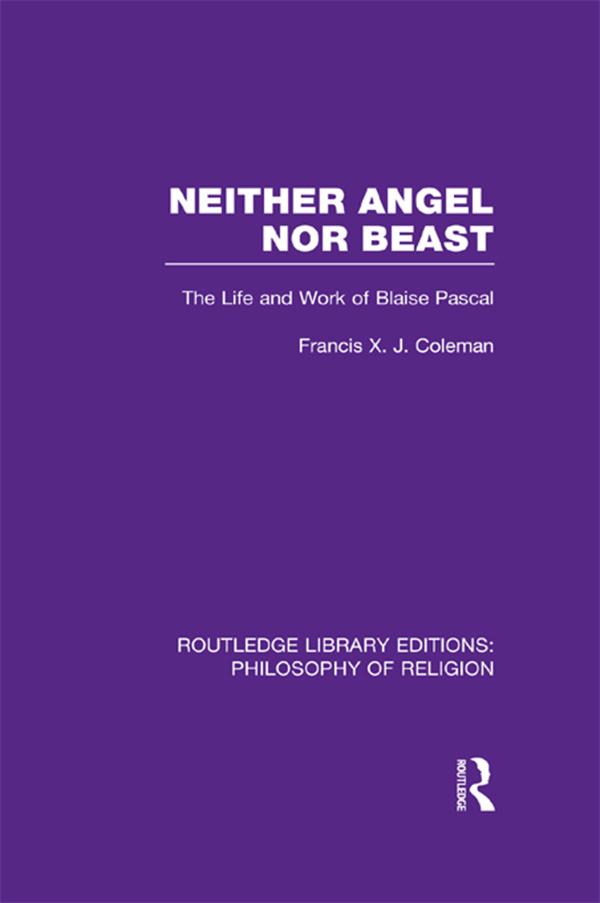
Blaise Pascal began as a mathematical prodigy, developed into a physicist and inventor, and had become by the end of his life in 1662 a profound religious thinker. As a philosopher, he was most convinced by the long tradition of scepticism, and so refused – like Kierkegaard – to build a philosophical or theological system. Instead, he argued that the human heart required other forms of discourse to come to terms with the basic existential questions – our nature, purpose and relationship with God.
This introduction to the life and philosophical thought of Pascal is intended for the general reader. Strikingly illustrated, it traces the antithetical tensions in Pascal’s life from his infancy, when he was said to have been placed under the spell of a sorceress, to his final years of extreme asceticism. Pascal stressed both the misery and greatness of humanity, our finitude and our comprehension of the infinite. The book shows how his life, philosophical thought and literary style can best be understood in the light of the paradoxical view of human nature. It covers the methods of argument and the central issues of the Provincial Letters and of the Pensées; the Introduction places Pascal’s thought in the religious and political climate of seventeenth-century France, and a ‘Chronology of the Life of Pascal’ is also included.
Zahle einfach mit Karte, Klarna, Apple Pay oder Google Pay. Nicht zufrieden? Du hast immer ein 14-tägiges Widerrufsrecht. Lies mehr in unseren AGB. Hast du Fragen, schreib uns eine E-Mail an hello@memmo.org.
Memmo macht das Lernen einfacher – wo auch immer du bist. Bei uns findest du deine Kursbücher und smarte Lerntools an einem Ort: Zusammenfassungen, Quizzes, Podcasts und Lernkarten. Und Ted, dein Lernbuddy, beantwortet alles, was du wissen möchtest. Über 50.000 Studierende lernen bereits hier – gemacht, damit du schneller lernst und weniger Stress hast.