
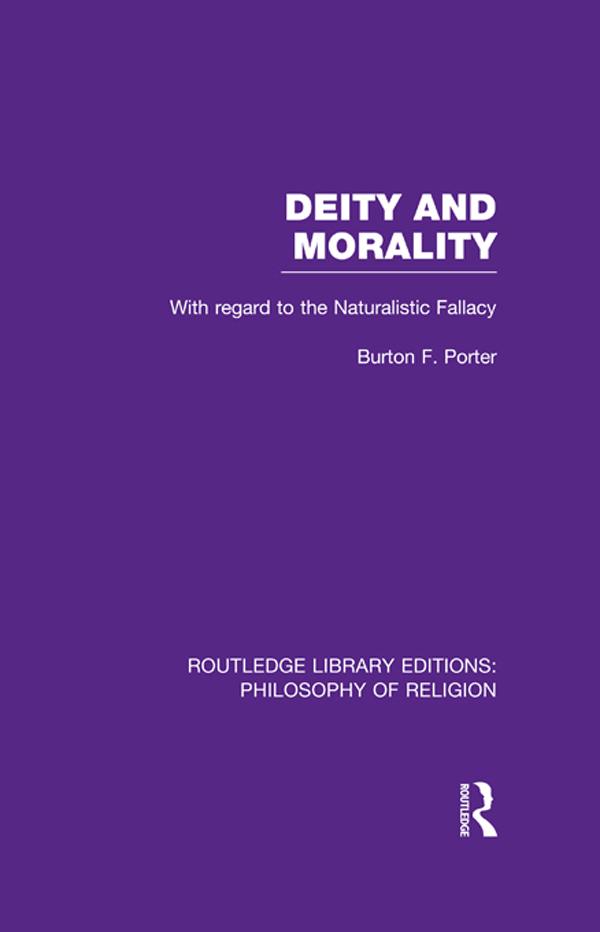
This book describes the "naturalistic fallacy", as attributed to Hume, that non-moral premises cannot logically entail a moral conclusion, and distinguishes it from the similarly named though subtly different fallacy identified by Moore in Principia Ethica by comparing and contrasting its presence in a range of ethical or moral systems. A review of Hume’s position elicits the implications to theological naturalism, and how this relates to Kierkegaard’s "paradox of faith" and the doctrine of ineffability. Methods of logical examination of religious language are discussed, leading to the dissection of the analytic proposition that ‘God is Good’ and of the connotations of proper names. Porter concludes from this a solution to the naturalistic fallacy: that "good" is essential to "God" by definition, and therefore that premises relating to God must contain an inherent morality.
Originally published in 1968, this book includes topics such as Mediaeval attitudes to deity and morality; Religious myth, images and language; Comparative conceptions of deity.
Zahle einfach mit Karte, Klarna, Apple Pay oder Google Pay. Nicht zufrieden? Du hast immer ein 14-tägiges Widerrufsrecht. Lies mehr in unseren AGB. Hast du Fragen, schreib uns eine E-Mail an hello@memmo.org.
Memmo macht das Lernen einfacher – wo auch immer du bist. Bei uns findest du deine Kursbücher und smarte Lerntools an einem Ort: Zusammenfassungen, Quizzes, Podcasts und Lernkarten. Und Ted, dein Lernbuddy, beantwortet alles, was du wissen möchtest. Über 50.000 Studierende lernen bereits hier – gemacht, damit du schneller lernst und weniger Stress hast.