
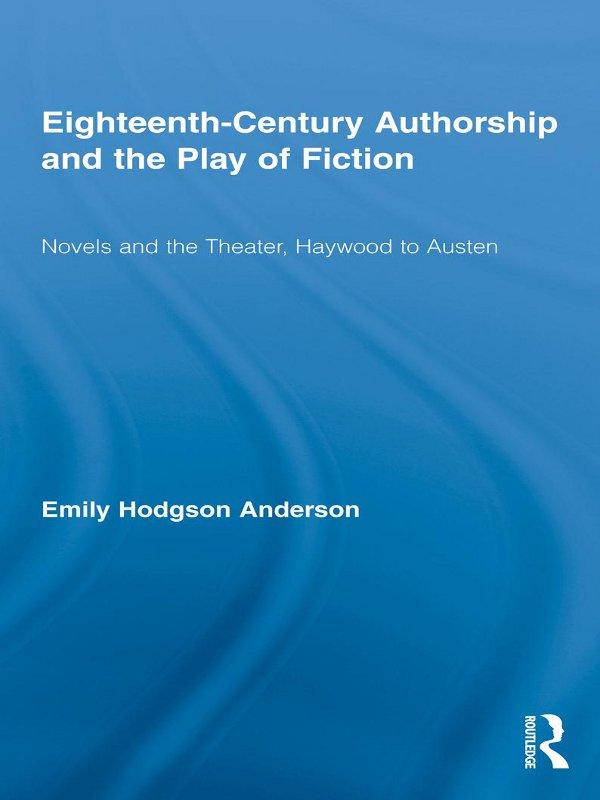
This study looks at developments in eighteenth-century drama that influenced the rise of the novel; it begins by asking why women writers of this period experimented so frequently with both novels and plays. Here, Eliza Haywood, Frances Burney, Elizabeth Inchbald, Maria Edgeworth, and Jane Austen explore theatrical frames--from the playhouse, to the social conventions of masquerade, to the fictional frame of the novel itself—that encourage audiences to dismiss what they contain as feigned. Yet such frames also, as a result, create a safe space for self-expression. These authors explore such payoffs both within their work—through descriptions of heroines who disguise themselves to express themselves—and through it. Reading the act of authorship as itself a form of performance, Anderson contextualizes the convention of fictionality that accompanied the development of the novel; she notes that as the novel, like the theater of the earlier eighteenth century, came to highlight its fabricated nature, authors could use it as a covert yet cathartic space. Fiction for these authors, like theatrical performance for the actor, thus functions as an act of both disclosure and disguise—or finally presents self-expression as the ability to oscillate between the two, in "the play of fiction."
Zahle einfach mit Karte, Klarna, Apple Pay oder Google Pay. Nicht zufrieden? Du hast immer ein 14-tägiges Widerrufsrecht. Lies mehr in unseren AGB. Hast du Fragen, schreib uns eine E-Mail an hello@memmo.org.
Memmo macht das Lernen einfacher – wo auch immer du bist. Bei uns findest du deine Kursbücher und smarte Lerntools an einem Ort: Zusammenfassungen, Quizzes, Podcasts und Lernkarten. Und Ted, dein Lernbuddy, beantwortet alles, was du wissen möchtest. Über 50.000 Studierende lernen bereits hier – gemacht, damit du schneller lernst und weniger Stress hast.