
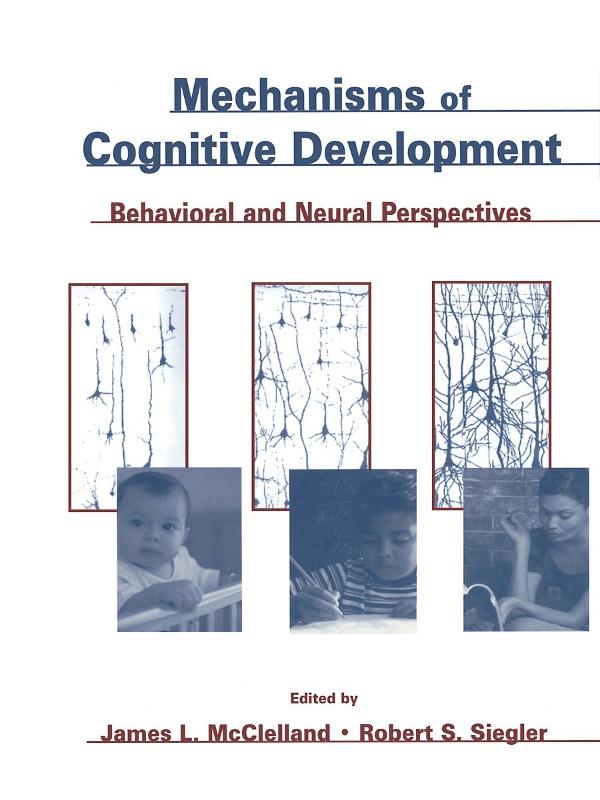
This volume considers how children's thinking evolves during development, with a focus on the role of experience in causing change. It brings together cutting-edge research by leaders in the psychology and neurobiology of child development to examine the processes by which children learn and those that make children ready and able to learn at particular points in development.
Behavioral approaches include research on the "microgenesis" of cognitive change over short time periods (e.g., several hour-long sessions) in specific task situations. Research on cognitive change over longer time scales (months and years) is also presented, as well as research that uses computational modeling and dynamical systems approaches to understand learning and development.
Neural approaches include the study of how neuronal activity and connectivity change during acquisition of cognitive skills in children and adults. Other investigations consider the possible emergence of cognitive abilities through the maturation of brain structures and the effects of experience on the organization of functions in the brain. Developmental anomalies, such as autism and attention deficit disorder are also examined as windows on normal development.
Four questions drive the volume:
*Why do cognitive abilities emerge when they do during development?
*What are the sources of developmental and individual differences, and of developmental anomalies in learning?
*What happens in the brain when people learn?
*How can experiences be ordered and timed to optimize learning?
The answers to these questions have strong implications for how we educate children and remediate deficits that have impeded the development of thinking abilities. These implications are explored in several chapters in the volume, as well as in the commentaries by leading discussants.
Zahle einfach mit Karte, Klarna, Apple Pay oder Google Pay. Nicht zufrieden? Du hast immer ein 14-tägiges Widerrufsrecht. Lies mehr in unseren AGB. Hast du Fragen, schreib uns eine E-Mail an hello@memmo.org.
Memmo macht das Lernen einfacher – wo auch immer du bist. Bei uns findest du deine Kursbücher und smarte Lerntools an einem Ort: Zusammenfassungen, Quizzes, Podcasts und Lernkarten. Und Ted, dein Lernbuddy, beantwortet alles, was du wissen möchtest. Über 50.000 Studierende lernen bereits hier – gemacht, damit du schneller lernst und weniger Stress hast.