
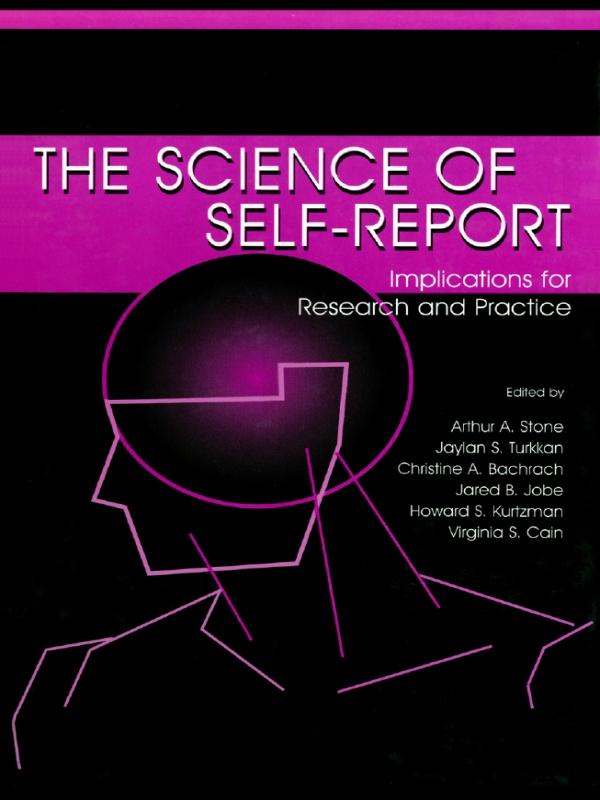
Rigorous methodological techniques have been developed in the last decade to improve the reliability and accuracy of self reports from research volunteers and patients about their pain, mood, substance abuse history, or dietary habits. This book presents cutting-edge research on optimal methods for obtaining self-reported information for use in the evaluation of scientific hypothesis, in therapeutic interventions, and in the development of prognostic indicators.
ALTERNATE BLURB:
Self-reports constitute critically important data for research and practice in many fields. As the chapters in this volume document, psychological and social processes influence the storage and recall of self-report information. There are conditions under which self-reports should be readily accepted by the clinician or researcher, and other conditions where healthy scepticism is required. The chapters demonstrate methods for improving the accuracy of self-reports, ranging from fine-tuning interviews and questionnaires to employing emerging technologies to collect data in ways that minimize bias and encourage accurate reporting.
Representing a diverse group of disciplines including sociology, law, psychology, and medicine, the distinguished authors offer crucial food for thought to all those whose work depends on the accurate self-reports of others.
Zahle einfach mit Karte, Klarna, Apple Pay oder Google Pay. Nicht zufrieden? Du hast immer ein 14-tägiges Widerrufsrecht. Lies mehr in unseren AGB. Hast du Fragen, schreib uns eine E-Mail an hello@memmo.org.
Memmo macht das Lernen einfacher – wo auch immer du bist. Bei uns findest du deine Kursbücher und smarte Lerntools an einem Ort: Zusammenfassungen, Quizzes, Podcasts und Lernkarten. Und Ted, dein Lernbuddy, beantwortet alles, was du wissen möchtest. Über 50.000 Studierende lernen bereits hier – gemacht, damit du schneller lernst und weniger Stress hast.