
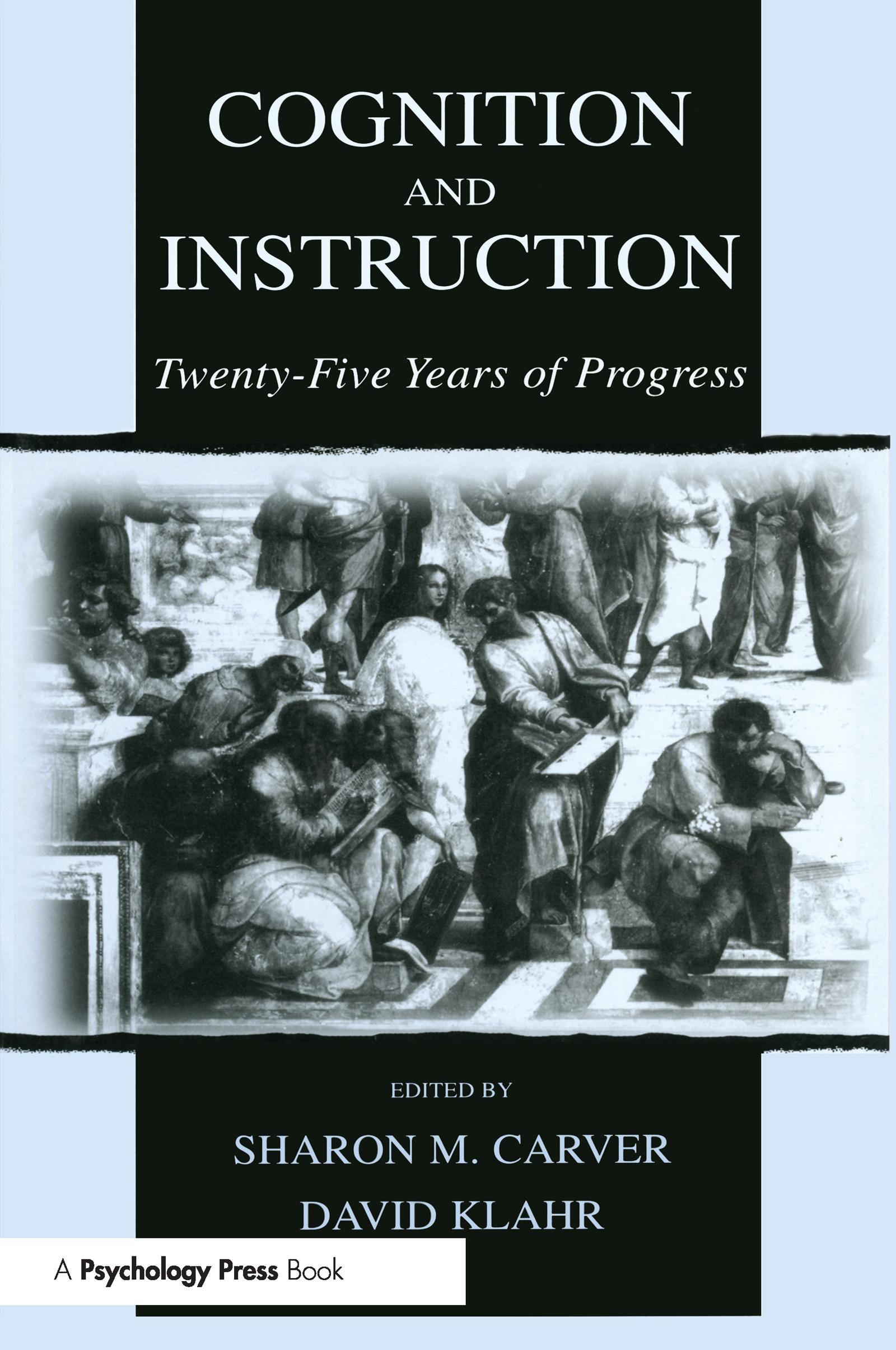
This volume is based on papers presented at the 30th Carnegie Mellon Symposium on Cognition. This particular symposium was conceived in reference to the 1974 symposium entitled Cognition and Instruction. In the 25 years since that symposium, reciprocal relationships have been forged between psychology and education, research and practice, and laboratory and classroom learning contexts. Synergistic advances in theories, empirical findings, and instructional practice have been facilitated by the establishment of new interdisciplinary journals, teacher education courses, funding initiatives, and research institutes. So, with all of this activity, where is the field of cognition and instruction? How much progress has been made in 25 years? What remains to be done? This volume proposes and illustrates some exciting and challenging answers to these questions.
Chapters in this volume describe advances and challenges in four areas, including development and instruction, teachers and instructional strategies, tools for learning from instruction, and social contexts of instruction and learning. Detailed analyses of tasks, subjects' knowledge and processes, and the changes in performance over time have led to new understanding of learners' representations, their use of multiple strategies, and the important role of metacognitive processes. New methods for assessing and tracking the development and elaboration of knowledge structures and processing strategies have yielded new conceptualizations of the process of change. Detailed cognitive analysis of expert teachers, as well as a direct focus on enhancing teachers' cognitive models of learners and use of effective instructional strategies, are other areas that have seen tremendous growth and refinement in the past 25 years. Similarly, the strong impact of curriculum materials and activities based on a thorough cognitive analysis of the task has been extended to the use of technological tools for learning, such as intelligent tutors and complex computer based instructional interfaces. Both the shift to conducting a significant portion of the cognition and instruction research in real classrooms and the increased collaboration between academics and educators have brought the role of the social context to center stage.
Zahle einfach mit Karte, Klarna, Apple Pay oder Google Pay. Nicht zufrieden? Du hast immer ein 14-tägiges Widerrufsrecht. Lies mehr in unseren AGB. Hast du Fragen, schreib uns eine E-Mail an hello@memmo.org.
Memmo macht das Lernen einfacher – wo auch immer du bist. Bei uns findest du deine Kursbücher und smarte Lerntools an einem Ort: Zusammenfassungen, Quizzes, Podcasts und Lernkarten. Und Ted, dein Lernbuddy, beantwortet alles, was du wissen möchtest. Über 50.000 Studierende lernen bereits hier – gemacht, damit du schneller lernst und weniger Stress hast.