
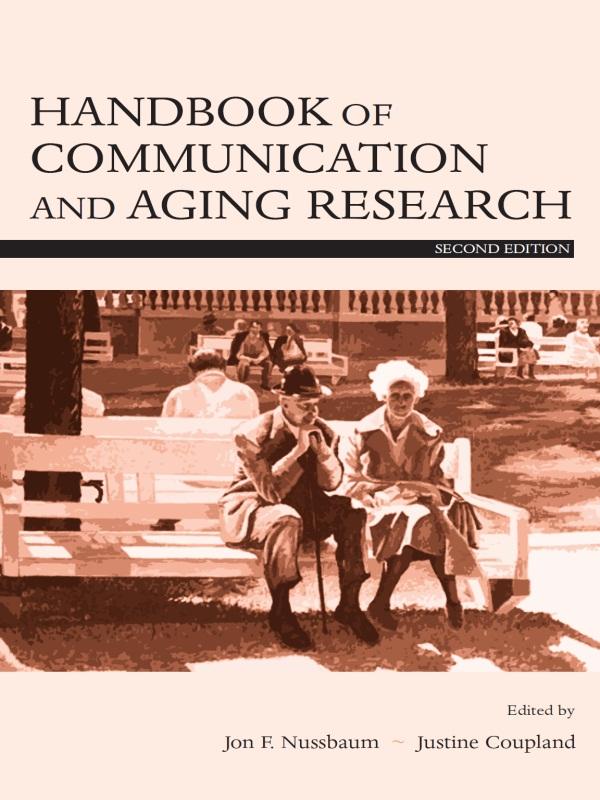
This second edition of the Handbook of Communication and Aging Research captures the ever-changing and expanding domain of aging research. Since it was first recognized that there is more to social aging than demography, gerontology has needed a communication perspective. Like the first edition, this handbook sets out to demonstrate that aging is not only an individual process but an interactive one. The study of communication can lead to an understanding of what it means to grow old. We may age physiologically and chronologically, but our social aging--how we behave as social actors toward others, and even how we align ourselves with or come to understand the signs of difference or change as we age--are phenomena achieved primarily through communication experiences.
Synthesizing the vast amount of research that has been published on communication and aging in numerous international outlets over the last three decades, the book's contributors include scholars from North America and the United Kingdom who are active researchers in the perspectives covered in their particular chapter. Many of the chapters work to deny earlier images of aging as involving normative decrement to provide a picture of aging as a process of development involving positive choices and providing new opportunities. A recuring theme in many chapters is that of the heterogeneity of the group of people who are variously categorized as older, aged, elderly, or over 65. The contributors review the literature analytically, in a way that reveals not only current theoretical and methodological approaches to communication and aging research but also sets the future agenda.
This handbook will be of great interest to scholars and researchers in gerontology, developmental psychology, and communication, and, in this updated edition, will continue to play a key role in the study of communication and aging.
Zahle einfach mit Karte, Klarna, Apple Pay oder Google Pay. Nicht zufrieden? Du hast immer ein 14-tägiges Widerrufsrecht. Lies mehr in unseren AGB. Hast du Fragen, schreib uns eine E-Mail an hello@memmo.org.
Memmo macht das Lernen einfacher – wo auch immer du bist. Bei uns findest du deine Kursbücher und smarte Lerntools an einem Ort: Zusammenfassungen, Quizzes, Podcasts und Lernkarten. Und Ted, dein Lernbuddy, beantwortet alles, was du wissen möchtest. Über 50.000 Studierende lernen bereits hier – gemacht, damit du schneller lernst und weniger Stress hast.