
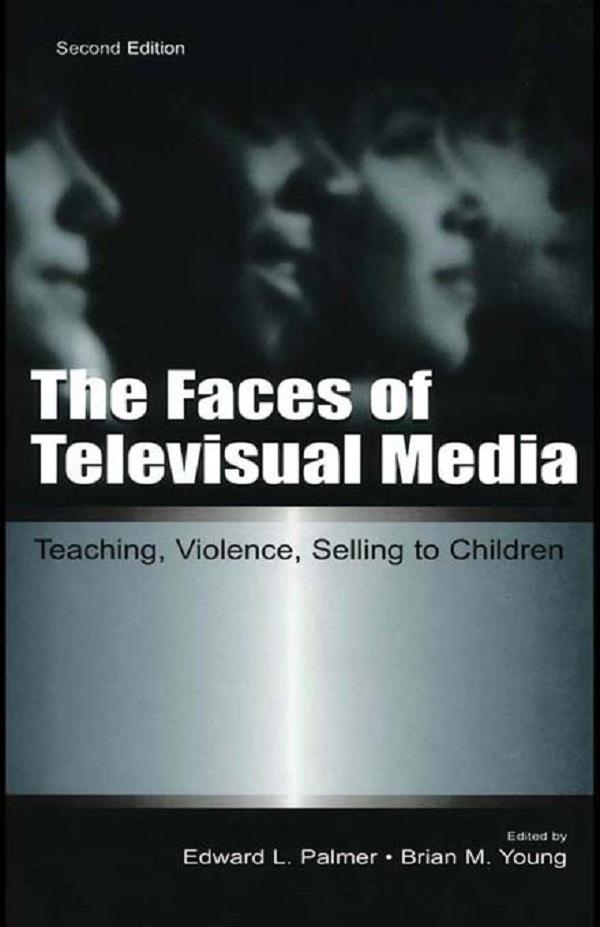
This collection offers original, state-of-the-art contributions from leading authorities in children's televisual media. International researchers from communication and psychology provide readers with ready access to current televisual research, trends, and policymaking/political climate issues pertaining to children. This second edition provides a current summary of studies on content, viewing patterns, comprehension, effects, and individual differences in instructional and educational programming, televisual entertainment and violence programming, and televisual advertising to children.
Editors Edward L. Palmer and Brian M. Young have structured the volume into three sections examining the "faces" of television: the Teaching (instructional/educational) Face, the Violent Face, and the Selling (advertising) Face. Chapters within each section identify and focus recurrent themes while integrating them topically into a coherent whole. Each area incorporates new technologies and considers their potentials, effects, and future. Subjects featured in the various chapters include:
*cross-cultural and historical comparisons with an in-depth perspective on the BBC and other European/Asian televisual media roots, as well as America's formative televisual media roots;
*an examination of key differences between developed and developing countries;
*implications of emerging instructional/educational media for children's education--addressing both cognitive and multi-ethnic aspects; and
* prominent, informed challenge to the prevailing popular view that children are unaffected and unharmed by exposure to media violence.
This volume informs ongoing debates across a broad spectrum of current, critical issues, and suggests avenues for future research. It is pertinent and provocative for the most sophisticated scholar in the field, as well as for students in areas of developmental or social psychology, communication, education, sociology, marketing, broadcasting and film, public policy, advertising, and medicine/pediatrics. It is also appropriate for courses in children, media, and society.
Zahle einfach mit Karte, Klarna, Apple Pay oder Google Pay. Nicht zufrieden? Du hast immer ein 14-tägiges Widerrufsrecht. Lies mehr in unseren AGB. Hast du Fragen, schreib uns eine E-Mail an hello@memmo.org.
Memmo macht das Lernen einfacher – wo auch immer du bist. Bei uns findest du deine Kursbücher und smarte Lerntools an einem Ort: Zusammenfassungen, Quizzes, Podcasts und Lernkarten. Und Ted, dein Lernbuddy, beantwortet alles, was du wissen möchtest. Über 50.000 Studierende lernen bereits hier – gemacht, damit du schneller lernst und weniger Stress hast.