
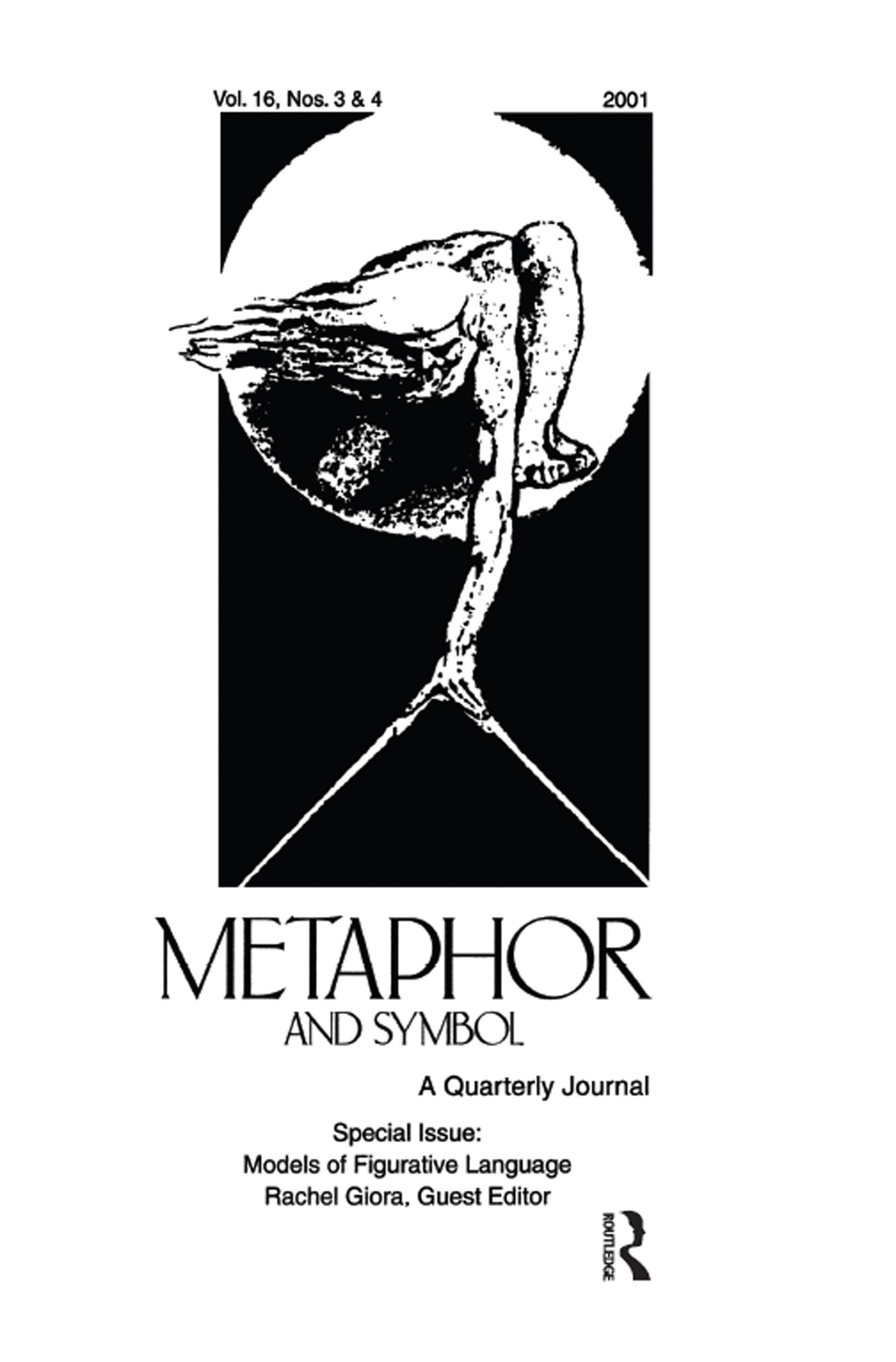
First published in 2001. Volume 16, Numbers 3&4. This special issue is an attempt to record the state of the art of psycholinguistics research into figurative language. There are quite a number of models addressing distinct issues and aiming to solve different problems—the mark of a maturing field. Indeed, not one theory is tailored to solve all the problems. Rather, each model, while aiming at generality, also recognizes its limitation. Despite specializing in different topics, most of the theories presented here have some things in common. For one, most of them dispense with the literal/ nonliteral divide, proposing, instead, models that are capable of handling literal as well as figurative language. Some models focus on the role primary meanings play in comprehension, others shed light on context effects, and some models seem to encompass both in terms of the accumulating effects of constraints (whether linguistic or contextual).
Zahle einfach mit Karte, Klarna, Apple Pay oder Google Pay. Nicht zufrieden? Du hast immer ein 14-tägiges Widerrufsrecht. Lies mehr in unseren AGB. Hast du Fragen, schreib uns eine E-Mail an hello@memmo.org.
Memmo macht das Lernen einfacher – wo auch immer du bist. Bei uns findest du deine Kursbücher und smarte Lerntools an einem Ort: Zusammenfassungen, Quizzes, Podcasts und Lernkarten. Und Ted, dein Lernbuddy, beantwortet alles, was du wissen möchtest. Über 50.000 Studierende lernen bereits hier – gemacht, damit du schneller lernst und weniger Stress hast.
Das könnte dir auch gefallen
Buch kaufen0