
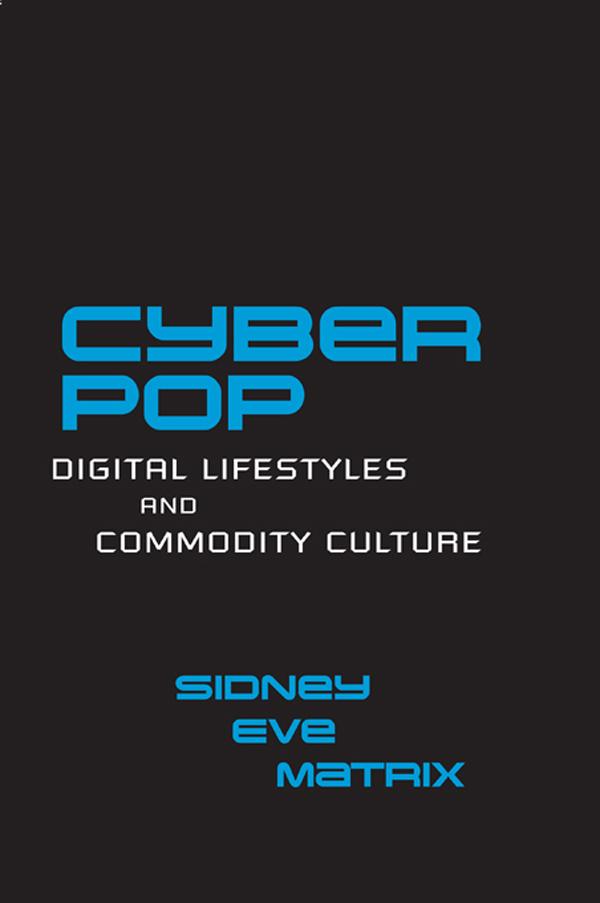
Cyberpop is an analysis of cyberculture and its popular cultural productions. The study begins with a Foucaultian model of cyberculture as a discursive formation, and explains how some key concepts (such as 'virtuality,' 'speed,' and 'Connectivity') operate as a conceptual architecture network linking technologies to information and individual subjects. The chapters then each focus on a particular cyberfiguration, including Hollywood films (GATTACA,The Matrix), popular literature (William Gibson's Neuromancer, Scott Westerfeld's Polymorph), advertising for digital products and services (Apple Computer's '1984/McIntosh' campaign, AT&T's 'mLife' campaign), digital artworks (including virtual females such as Motorola's 'Mya' and Elite Modeling Agency's 'Webbie Tookay,' and work by visual artist Daniel Lee for Microsoft's 'Evolution' campaign), and video games (TombRaider). Each close reading illustrates the ways in which representations of digital lifestyles and identities - which typically fetishize computers and celebrate a 'high tech' aesthetic encourage participation in digital capitalism and commodity cyberculture. Matrix argues that popular representations of cyberculture often function as forms of social criticism that creatively inspire audiences to 'think different' (in the words of Mac advertising) about the consequences of the digitalization of everyday life.
Zahle einfach mit Karte, Klarna, Apple Pay oder Google Pay. Nicht zufrieden? Du hast immer ein 14-tägiges Widerrufsrecht. Lies mehr in unseren AGB. Hast du Fragen, schreib uns eine E-Mail an hello@memmo.org.
Memmo macht das Lernen einfacher – wo auch immer du bist. Bei uns findest du deine Kursbücher und smarte Lerntools an einem Ort: Zusammenfassungen, Quizzes, Podcasts und Lernkarten. Und Ted, dein Lernbuddy, beantwortet alles, was du wissen möchtest. Über 50.000 Studierende lernen bereits hier – gemacht, damit du schneller lernst und weniger Stress hast.