
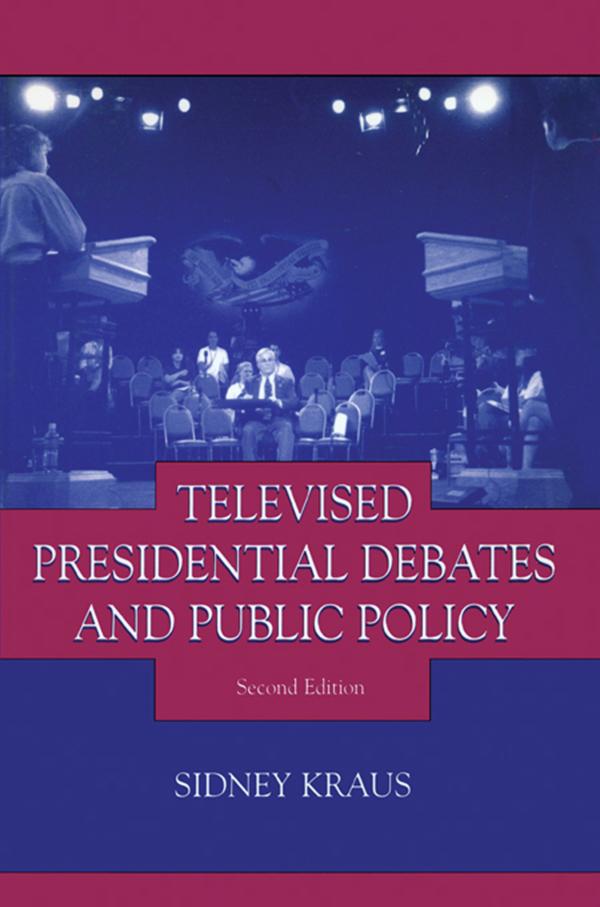
With this second edition, Kraus continues his examination of formal presidential debates, considering the experience of television in presidential elections, reviewing what has been learned about televised debates, and evaluating that knowledge in the context of the election process, specifically, and the political process, generally. He also examines the media and the role they occupy in presidential elections. Because critics often refer to the Lincoln-Douglas debates when reproaching presidential debates, comparisons of the two are discussed throughout the book. Much of the data and information for this accounting of televised presidential debates comes from the author's first-hand experience as one who was involved with these debates as a participant observer, on site at nearly all of the debates discussed.
Throughout these discussions, emphasis is placed on the implications for public policy. To suggest policy that will be accepted and adopted by politicians and the public is, at best, difficult. Proposals for changes in public policy based on experience -- even when scientific data support those changes -- must be subjected to an assessment of the values and predispositions of the proponent. These values and predispositions, however, may not necessarily inhibit the proponent's objectivity. As such, this review of television use in the presidential election process provides the context for examining televised debates.
Zahle einfach mit Karte, Klarna, Apple Pay oder Google Pay. Nicht zufrieden? Du hast immer ein 14-tägiges Widerrufsrecht. Lies mehr in unseren AGB. Hast du Fragen, schreib uns eine E-Mail an hello@memmo.org.
Memmo macht das Lernen einfacher – wo auch immer du bist. Bei uns findest du deine Kursbücher und smarte Lerntools an einem Ort: Zusammenfassungen, Quizzes, Podcasts und Lernkarten. Und Ted, dein Lernbuddy, beantwortet alles, was du wissen möchtest. Über 50.000 Studierende lernen bereits hier – gemacht, damit du schneller lernst und weniger Stress hast.