
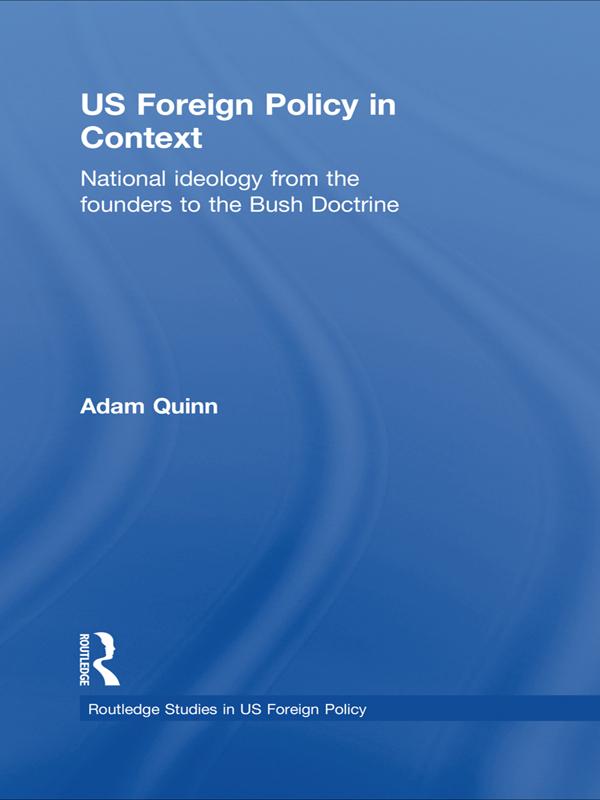
This work blends strategic analysis of contemporary US foreign policy with long-term historical discussion, producing an important argument relevant to the debates surrounding both the merits of contemporary US foreign policy and the long-term trends at work in American political culture.
Rather than a detailed historical study of the Bush administration itself, the book seeks to locate Bush within the historical context of the US foreign policy tradition. It makes the case for nationally specific ideological factors as a driver of foreign policy and for importance of interaction between the domestic and the international in the emergence of national strategy.
The contemporary element focuses on critiquing the George W. Bush administration’s National Security Strategy, perceived by many as a radical and unwelcome ideological departure from past policy, and its broader foreign policy, concentrating especially on its embrace of liberal universalism and rejection of realism. This critique is supported by the cumulative argument, based upon the historical cases, seeking to explain American leaders’ persistent resistance to the prescriptions of realism. Quinn argues for some causal connection between historically evolved ideological constructions and the character of the nation’s more recent international strategy.
Providing a valuable addition to the field, this book will be of great interest to scholars in American politics, US foreign policy and US history.
Zahle einfach mit Karte, Klarna, Apple Pay oder Google Pay. Nicht zufrieden? Du hast immer ein 14-tägiges Widerrufsrecht. Lies mehr in unseren AGB. Hast du Fragen, schreib uns eine E-Mail an hello@memmo.org.
Memmo macht das Lernen einfacher – wo auch immer du bist. Bei uns findest du deine Kursbücher und smarte Lerntools an einem Ort: Zusammenfassungen, Quizzes, Podcasts und Lernkarten. Und Ted, dein Lernbuddy, beantwortet alles, was du wissen möchtest. Über 50.000 Studierende lernen bereits hier – gemacht, damit du schneller lernst und weniger Stress hast.