
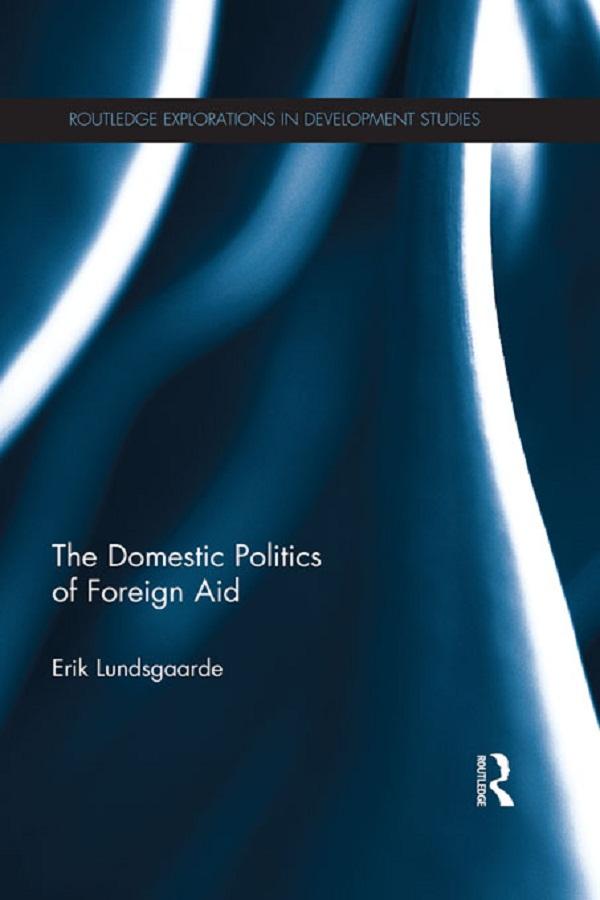
In spite of shared rhetorical commitments to tackling poverty worldwide, donors have varied considerably in their use of aid as an instrument for global poverty reduction. This book explains varied donor priorities by examining how societal actors, governmental actors, and the institutions that regulate their interactions influence development policy choices.
The Domestic Politics of Foreign Aid challenges explanations for donor generosity that identify humanitarian values, partisan politics, and welfare state institutions as key determinants of aid-giving patterns. It explains how the preferences of diverse sets of actors are amalgamated in the domestic political arena to shape national preferences for international redistribution. Drawing on interview research conducted with a variety of stakeholders in four donor countries (Denmark, France, Switzerland and the United States) and an extensive review of primary and secondary sources on aid politics in the countries studied, the book offers both a static overview of the characteristics of aid policymaking systems and a historical treatment of policymaking dynamics over a 25-year period (1980-2005).
Applying a common theoretical framework to the four case studies and using development NGO advocacy as a starting point for examining the politics of aid, this book provides a synthesis of several strands of theoretical work dealing with interest group politics and political institutions to inform the analysis of the societal and governmental determinants of aid choices.
Zahle einfach mit Karte, Klarna, Apple Pay oder Google Pay. Nicht zufrieden? Du hast immer ein 14-tägiges Widerrufsrecht. Lies mehr in unseren AGB. Hast du Fragen, schreib uns eine E-Mail an hello@memmo.org.
Memmo macht das Lernen einfacher – wo auch immer du bist. Bei uns findest du deine Kursbücher und smarte Lerntools an einem Ort: Zusammenfassungen, Quizzes, Podcasts und Lernkarten. Und Ted, dein Lernbuddy, beantwortet alles, was du wissen möchtest. Über 50.000 Studierende lernen bereits hier – gemacht, damit du schneller lernst und weniger Stress hast.