
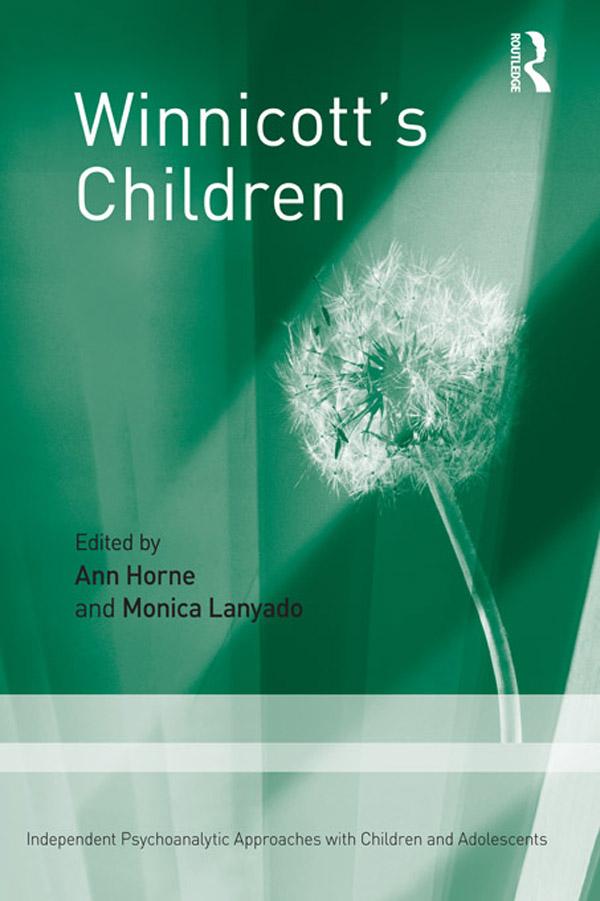
Winnicott’s Children focuses on the use we make of the thinking and writing of DW Winnicott; how this has enhanced our understanding of children and the settings where we work, and how it has influenced the way in which we do that work. It is a volume by clinicians, concerned about how, as well as why, we engage with particular children in particular ways.
The book begins with a scholarly and accessible exposition of the place of Winnicott in his time, in relation to his contemporaries – Melanie Klein, Anna Freud, John Bowlby – and the development of his thinking. The dual focus on the earliest experience of the infant and its consequences plus the ‘how’ of engaging with children – as good-enough mothers or good enough therapists – is picked up in the chapters that follow. The role of play is central to a chapter on supervision; struggling through the doldrums can be part of the adolescent’s experience and that of those who engage with him; the role of psychotherapy in a Winnicottian therapeutic community and an inner city secondary school is explored; and a chapter on radio work links us personally with Winnicott and his desire to talk plainly and helpfully to parents.
There is a richness in the collection of subjects in this book, and in the experience of the writers. It will appeal to those who work with children – in child and family mental health settings, schools, hospitals, colleges and social care settings.
Zahle einfach mit Karte, Klarna, Apple Pay oder Google Pay. Nicht zufrieden? Du hast immer ein 14-tägiges Widerrufsrecht. Lies mehr in unseren AGB. Hast du Fragen, schreib uns eine E-Mail an hello@memmo.org.
Memmo macht das Lernen einfacher – wo auch immer du bist. Bei uns findest du deine Kursbücher und smarte Lerntools an einem Ort: Zusammenfassungen, Quizzes, Podcasts und Lernkarten. Und Ted, dein Lernbuddy, beantwortet alles, was du wissen möchtest. Über 50.000 Studierende lernen bereits hier – gemacht, damit du schneller lernst und weniger Stress hast.