
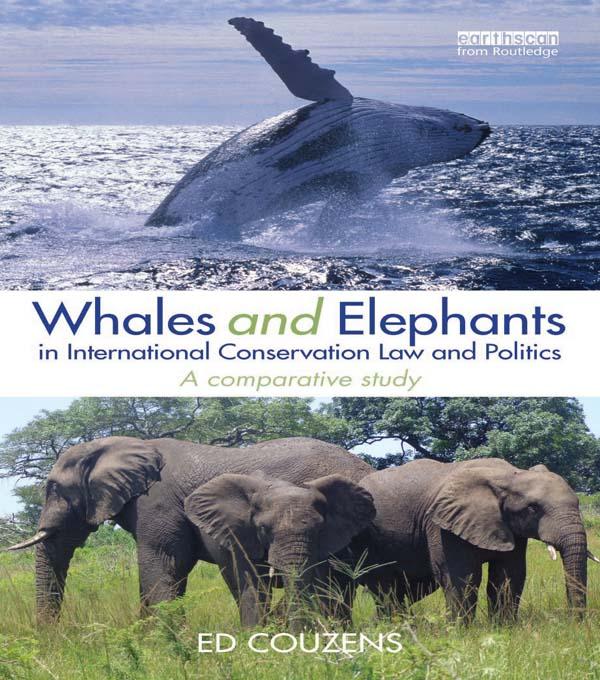
Whales and elephants are iconic giants of the marine and terrestrial animal world. Both are conspicuous representatives of wildlife conservation. The issues of whaling and the ivory trade are closely linked, both legally and politically, in many ways; some obvious, and some surprising. The treatment of both whales and elephants will be politically and legally contentious for years to come, and is of great significance to conservation in general.
This book examines the current state of international environmental law and wildlife conservation through a comparative analysis of the treatment of whales and elephants. In particular, it describes the separate histories of international governance of both whales and elephants, presenting the various treaties through which conservation has been implemented. It is shown that international environmental law is influenced and shaped by important political actors – many with opposing views on how best conservation, and sustainable development, principles are to be implemented. Modern environmental treaties are changing as weaknesses and loopholes are exposed in older, and possibly outdated, treaties such as the Convention on International Trade in Endangered Species of Wild Fauna and Flora (CITES) and the International Convention for the Regulation of Whaling (ICRW). Such weaknesses can be seen in the efforts made by some states to circumvent or weaken CITES and the International Whaling Commission and to resume commercial whaling, and further in the efforts of countries to resume trade in ivory. The argument is made that the Convention on Biological Diversity could be used to begin reconciling opposed views and to focus conservation efforts.
The argument is made that effective conservation of species cannot be achieved through individual treaties, but only through a synergistic approach involving multilateral environmental agreements – 'ecosystems of legal instruments'.
Zahle einfach mit Karte, Klarna, Apple Pay oder Google Pay. Nicht zufrieden? Du hast immer ein 14-tägiges Widerrufsrecht. Lies mehr in unseren AGB. Hast du Fragen, schreib uns eine E-Mail an hello@memmo.org.
Memmo macht das Lernen einfacher – wo auch immer du bist. Bei uns findest du deine Kursbücher und smarte Lerntools an einem Ort: Zusammenfassungen, Quizzes, Podcasts und Lernkarten. Und Ted, dein Lernbuddy, beantwortet alles, was du wissen möchtest. Über 50.000 Studierende lernen bereits hier – gemacht, damit du schneller lernst und weniger Stress hast.